
In aviation, reliable emergency lighting is crucial for guiding passengers and crew through safe evacuation under low-visibility conditions. The Airbus A220 emergency lights exemplify how modern jets integrate advanced power supplies, robust distribution, and straightforward cockpit and cabin controls to ensure swift and effective illumination in a crisis. From overhead aisle lighting to exterior lights for slide deployment, this system stands as a key element in the A220’s overall commitment to passenger well-being.
Evolution of Aircraft Emergency Lighting
Early aircraft featured simple incandescent bulbs running on the aircraft’s primary electrical bus. Any power loss left them in the dark, complicating evacuations. Over time, regulatory bodies mandated independent power sources and more comprehensive coverage—from floor path lighting to exterior exit illuminations. Modern systems, like those found on the Airbus A220, not only power a broader network of lights but also incorporate rechargeable batteries and self-monitoring features for reliability and convenience.
Core Components and Configuration
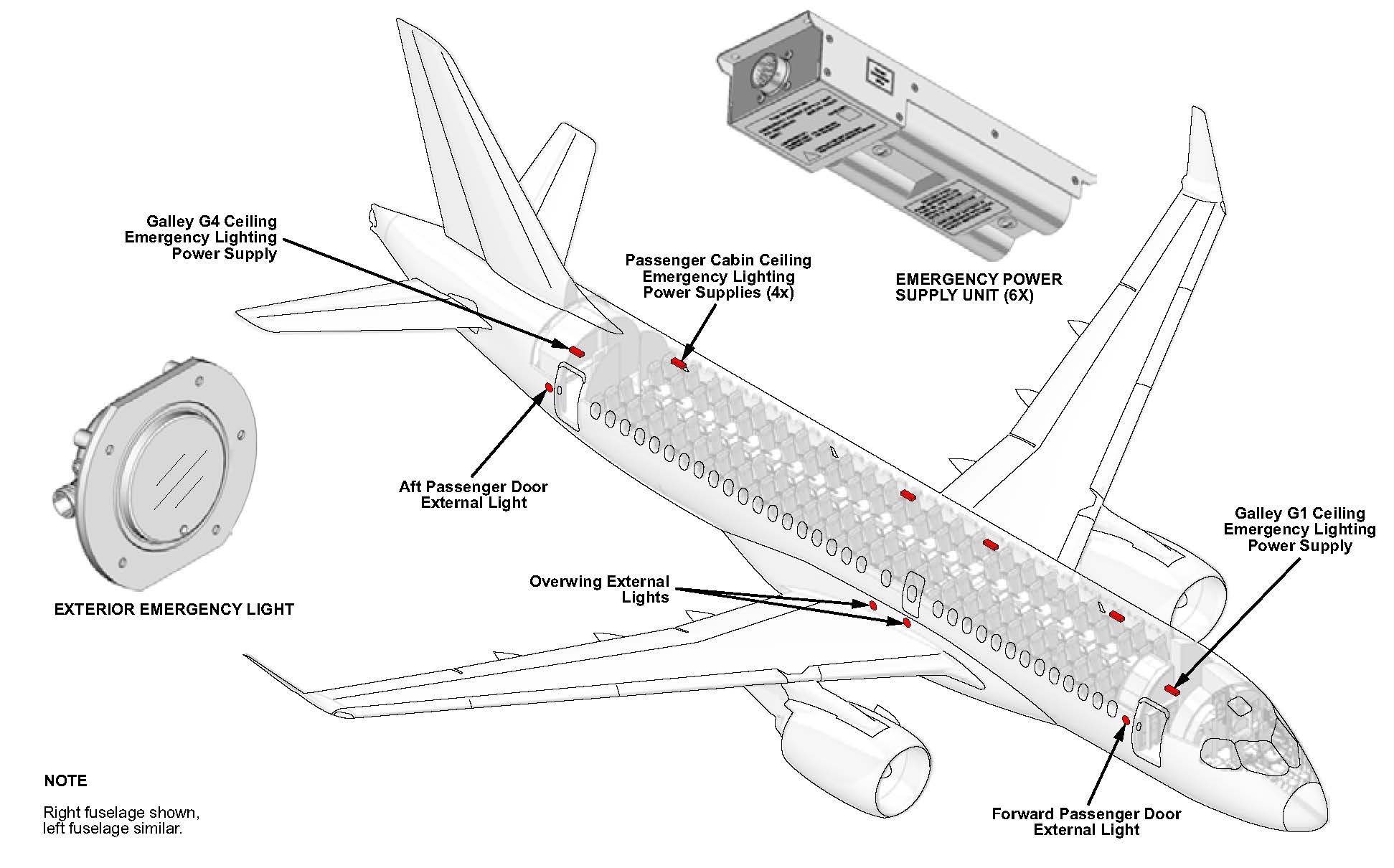
At the heart of the Airbus A220 emergency lights are six Emergency Power Supply Units (EPSUs), each housing a NiMH battery pack and a control circuit. These EPSUs:
- Monitor DC Essential Power:
They’re connected to the DC ESS buses (some to Bus 1, others to Bus 2). If these sources fail or drop below a preset threshold, the EPSUs automatically supply 5.6 VDC power for up to 10 minutes—plenty of time to evacuate the aircraft. - Charge and Status Reporting:
As long as DC ESS power is available, each EPSU charges and continuously provides health data to the Data Concentrator Unit Module Cabinets (DMCs). If an EPSU or battery degrades, the DMC alerts the flight crew via a CAS (Crew Alerting System) message. - Local Light Distribution:
Each EPSU powers the lights in its immediate area, minimizing wiring complexity. These lights include overhead emergency fixtures, aisle markers, exit identifiers, and exterior lights that illuminate the door surroundings and wing paths.
Flight Deck and Cabin Controls
Two primary switches control the Airbus A220 emergency lights:
- Flight Deck EMER LTS Switch (Overhead Panel):
- OFF – Prevents accidental emergency light activation if the aircraft is powered down on the ground.
- ARM – Normal position. If DC essential power fails, the EPSUs automatically turn on the lights.
- ON – Manually forces the lights on, regardless of DC power status.
- Cabin EMER LIGHTS Switch (Forward Attendant Panel):
- Normally used to activate or cancel emergency lights if the flight deck switch is in ARM or OFF.
- Protected by a guard to reduce the chance of inadvertent engagement.
When either switch is set to ON (while the other is in ARM or OFF), the lights illuminate instantly. The flight crew or cabin crew must place both switches in the OFF position before fully removing power from the aircraft; otherwise, the EPSUs detect a loss of DC essential power and power up the emergency lights.
Safety Benefits and Key Features
- Automatic Activation:
In the event of a total or partial power failure, the EPSUs immediately energize the lights, sparing precious time during an emergency. - Redundancy in Power Supply:
Because the EPSUs are distributed and draw from separate DC essential buses, the system maintains partial coverage even if one bus or battery pack fails. - Clear Signage and Egress Paths:
Dedicated exit identifier signs, aisle lights, and exterior lighting ensure passengers and crew can navigate quickly and safely to the exits.
Final Thoughts
In an aircraft emergency, every second matters. The Airbus A220 emergency lights system underscores the aircraft’s comprehensive approach to passenger safety, blending a robust power strategy with intuitive controls and thorough distribution of lights throughout the cabin and exterior doors. It’s yet another demonstration of how the A220 leads the way in modern, passenger-focused engineering—prioritizing clear, reliable illumination exactly when it’s needed most.


