
The Airbus H135 can trace its origins back through several decades of German helicopter development. Long before the H135 name appeared, Bölkow and later MBB were developing rotor technology that would eventually influence the aircraft we know today.
An important predecessor was the Bo 105, a twin-engine multipurpose helicopter introduced during the 1960s. After around two decades of Bo 105 service, development began on a replacement: the Bo 108, which made its first flight on 15 October 1988.
The Bo 108 was more than simply a replacement aircraft. Feedback from helicopter operators identified several areas for improvement, including increased cabin volume, better visibility and greater flexibility between passenger, cargo and other mission configurations. One particularly useful feature was a flat, unobstructed cabin floor, allowing the interior to be reconfigured more easily.
From Bo 108 to EC135
The project changed significantly following the creation of Eurocopter. In late 1992, the design was modified to accommodate up to six passengers and two crew members, while the Fenestron® anti-torque system developed by Aérospatiale was incorporated into the aircraft. These changes helped transform the Bo 108 concept into the helicopter that became the EC135.
Certification by the German LBA and the US FAA was completed in the middle of 1996.
The resulting aircraft combined a number of distinctive engineering features. The EC135 is a light, twin-engine multipurpose helicopter using a four-bladed Bearingless Main Rotor (BMR) and Fenestron anti-torque system. Its structure combines aluminium and composite construction, while major systems include redundant hydraulic, electrical and flight-control arrangements.
Two Engine Families
One unusual aspect of the EC135 family is that it was developed around two different engine manufacturers.
The P-series uses Pratt & Whitney Canada PW206 engines, while the T-series uses Turbomeca — now Safran Helicopter Engines — Arrius engines. The original P1 and T1 were followed by progressively developed P2/T2, P2+/T2+ and P3/T3 versions.
Despite the different powerplants, both engine families were integrated into the same basic helicopter platform, allowing the EC135 family to evolve while retaining its fundamental airframe and system architecture.
From EC135 to H135
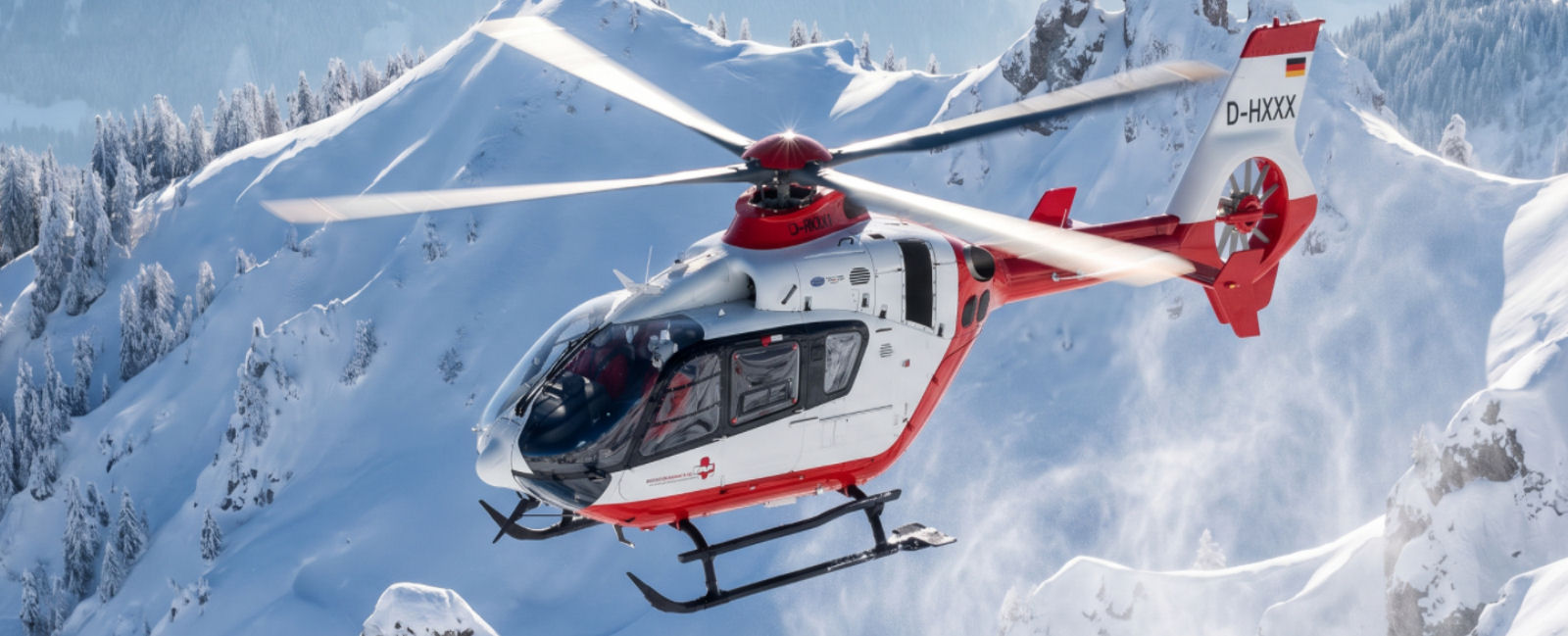
Following Eurocopter’s transition into Airbus Helicopters, the EC135 designation became H135. Although the name changed and later aircraft incorporated further developments, the fundamental design can still be traced directly back through the EC135 to the Bo 108.
That lineage helps explain some of the H135’s most recognisable characteristics: a twin-engine installation, compact airframe, flexible cabin, bearingless four-bladed main rotor and enclosed Fenestron tail rotor.
For engineers, the H135 is particularly interesting because these features are not isolated technologies. The engines, transmission, rotor systems, hydraulics, flight controls, electrical systems and avionics operate as an integrated aircraft system.
In the next article, we’ll look more closely at one of the most distinctive features of the H135: how the Fenestron tail rotor works.


