
CNY
¥6,133.95
Online Airbus H135 / EC135 Continuation Training covering the aircraft, its systems, avionics, PW206B and Arrius 2B powerplants, together with current aviation technology and modern maintenance developments. Designed to support continuation training requirements and refresh aircraft type knowledge.
This comprehensive online Airbus H135 / EC135 Continuation Training Course is designed for maintenance personnel who require recurrent aircraft type knowledge together with an update on current aviation technology and modern maintenance practices.
The course covers the aircraft airframe, systems, avionics and both Pratt & Whitney PW206B and Safran Arrius 2B powerplants. It is structured to support continuation training requirements under EASA Part-145.A.35, combining aircraft-specific technical knowledge with developments affecting today’s maintenance environment.
The aircraft-specific section reviews the principal systems and technical features of the H135 / EC135, including:
General Aircraft Overview
Aircraft development, model designation, certification, general construction and aircraft configuration.
ATA 21 – Environmental Systems
Ventilation, bleed-air heating, temperature control and air-conditioning systems.
ATA 22 – Automatic Flight Control System
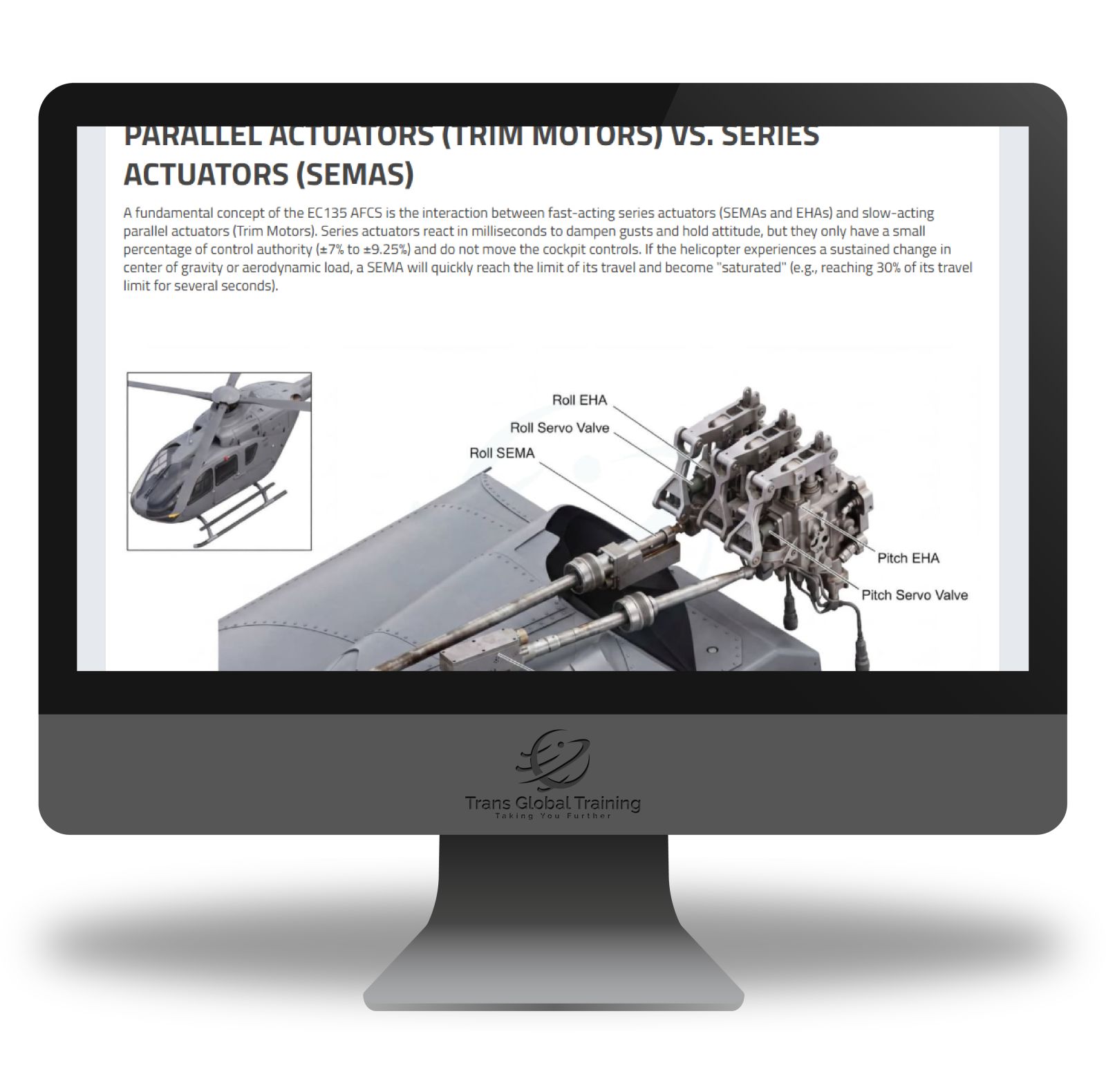
Yaw SAS, Pitch and Roll SAS, Pitch Damper, autopilot functions, actuators, autotrim and associated sensor inputs.
ATA 23 – Communications
Audio management, cockpit audio controls, intercom, VHF communications and emergency communication modes.
ATA 24 – Electrical Power
Battery system, starter-generators, Electrical Master Boxes, electrical distribution, busbars, external power, load shedding and static inverters.
ATA 26 – Fire Protection
Engine compartment fire detection, warning, emergency shutdown and fire extinguishing systems.
ATA 28 – Fuel System
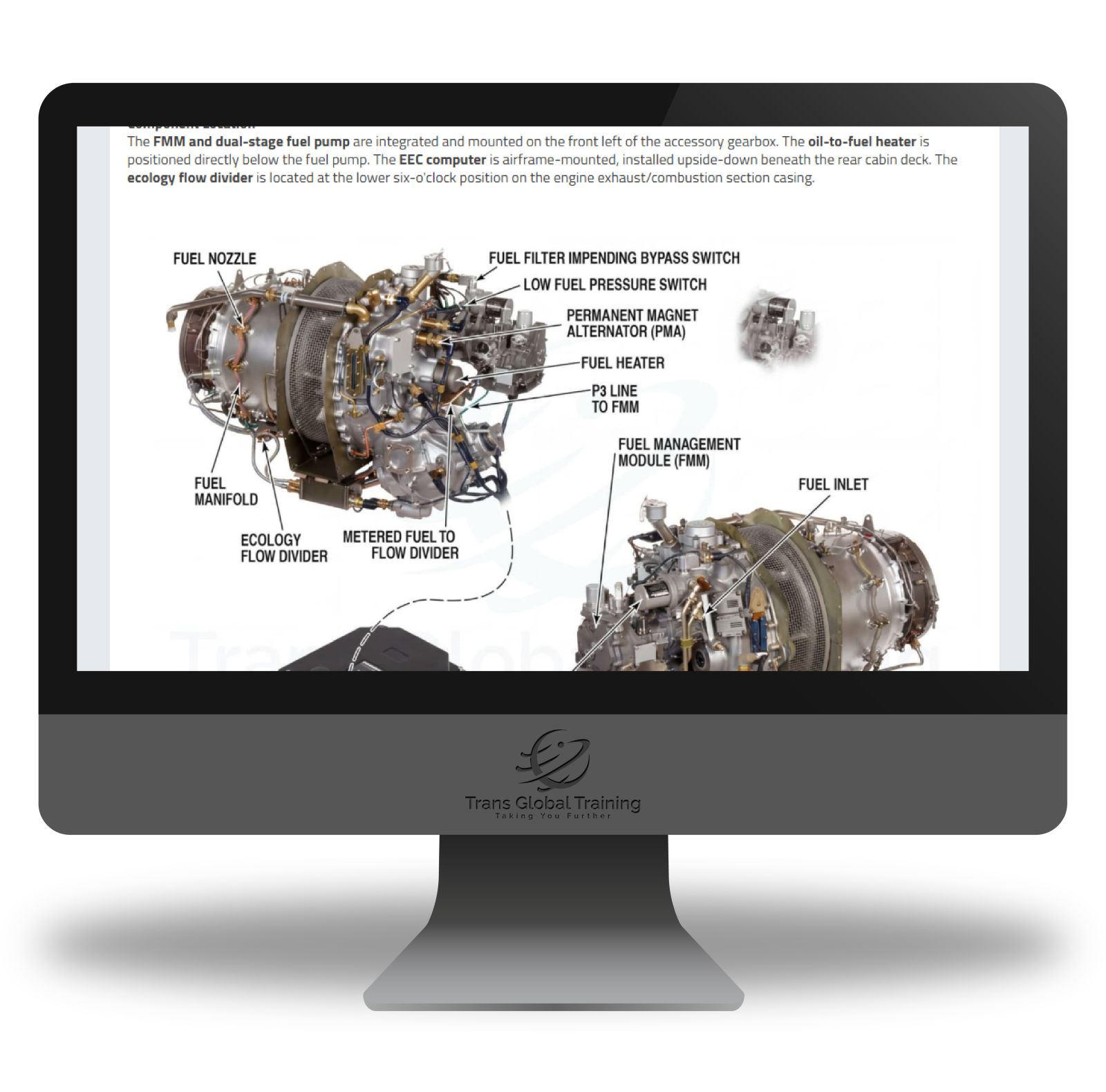
Fuel storage, venting, pumps, quantity indication, fuel management and refuelling.
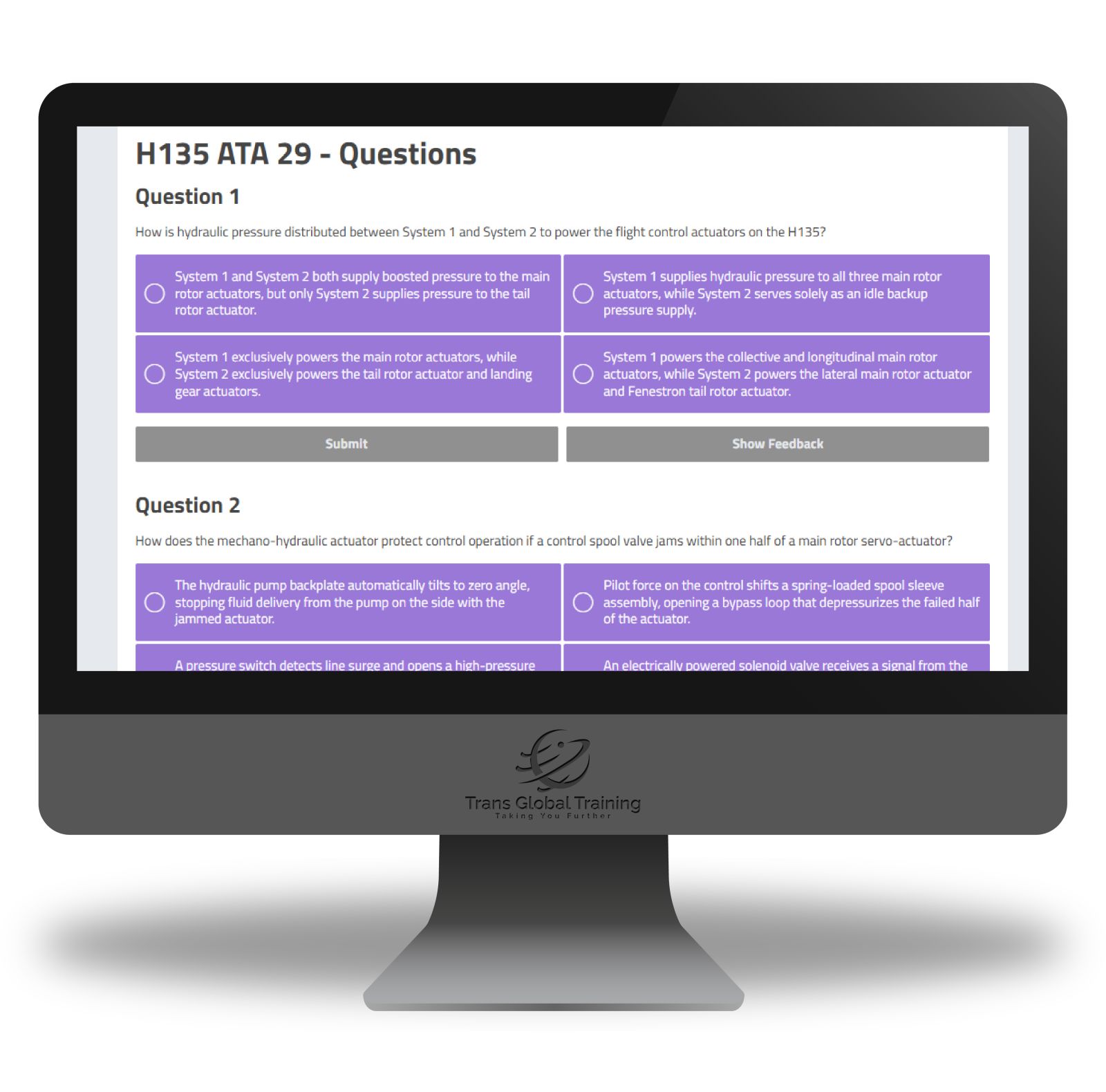
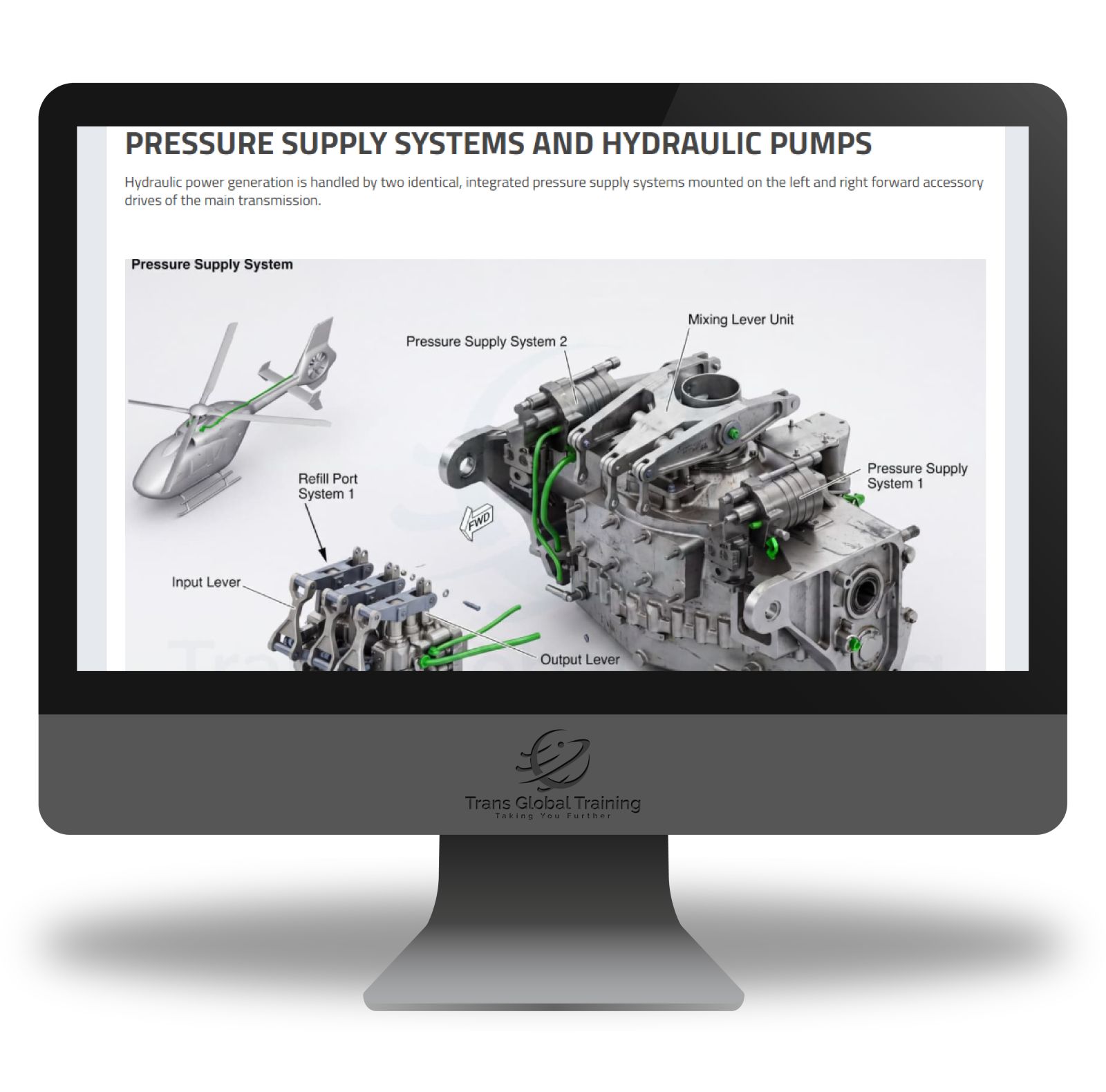
ATA 29 – Hydraulic Power
Dual hydraulic systems, pumps, reservoirs, pressure regulation, monitoring and flight-control actuators.
ATA 30 – Ice and Rain Protection
Pitot-static heating, windshield defrosting and defogging and windshield wiper systems.
ATA 31 – Indicating and Recording Systems
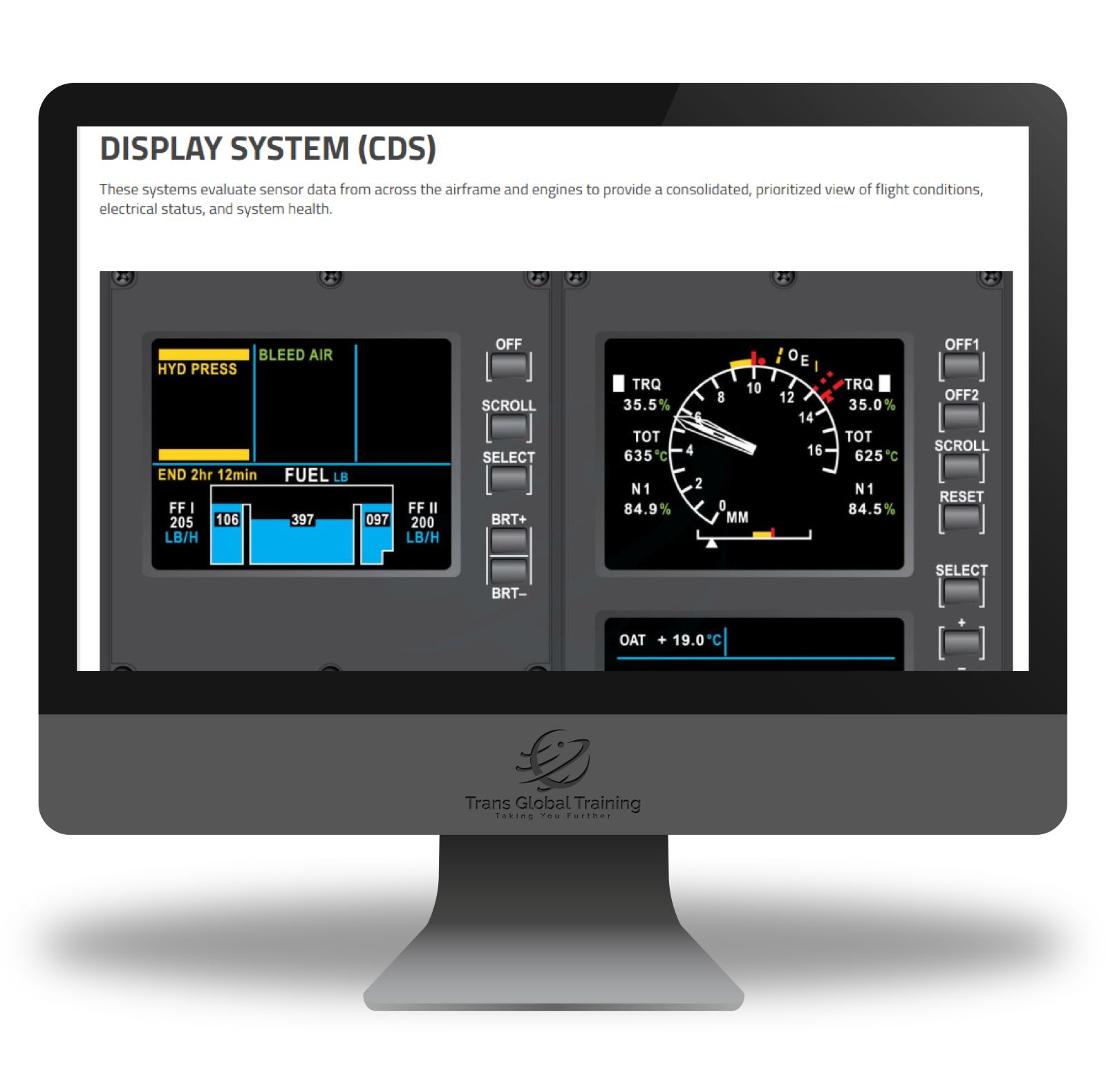
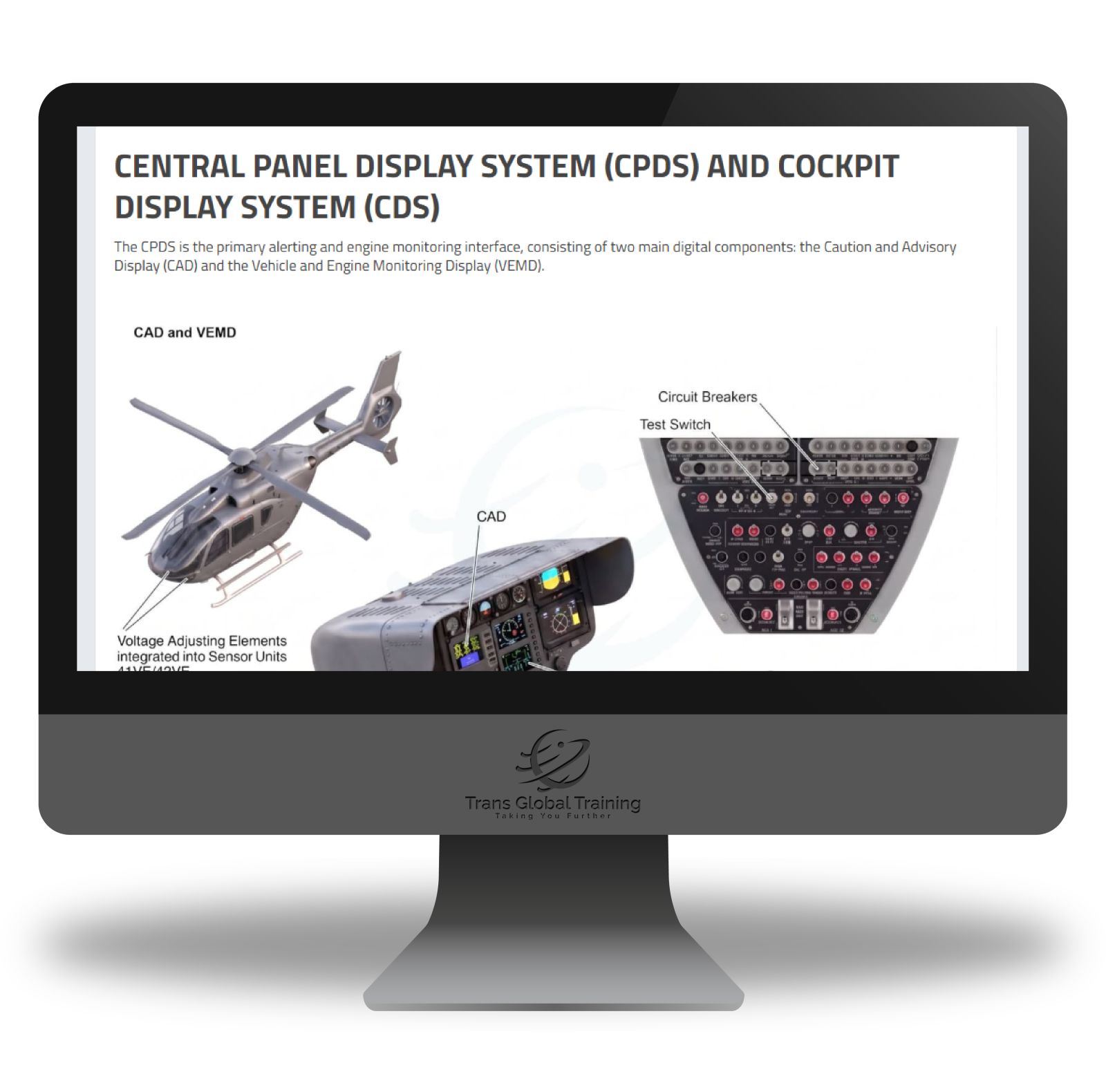
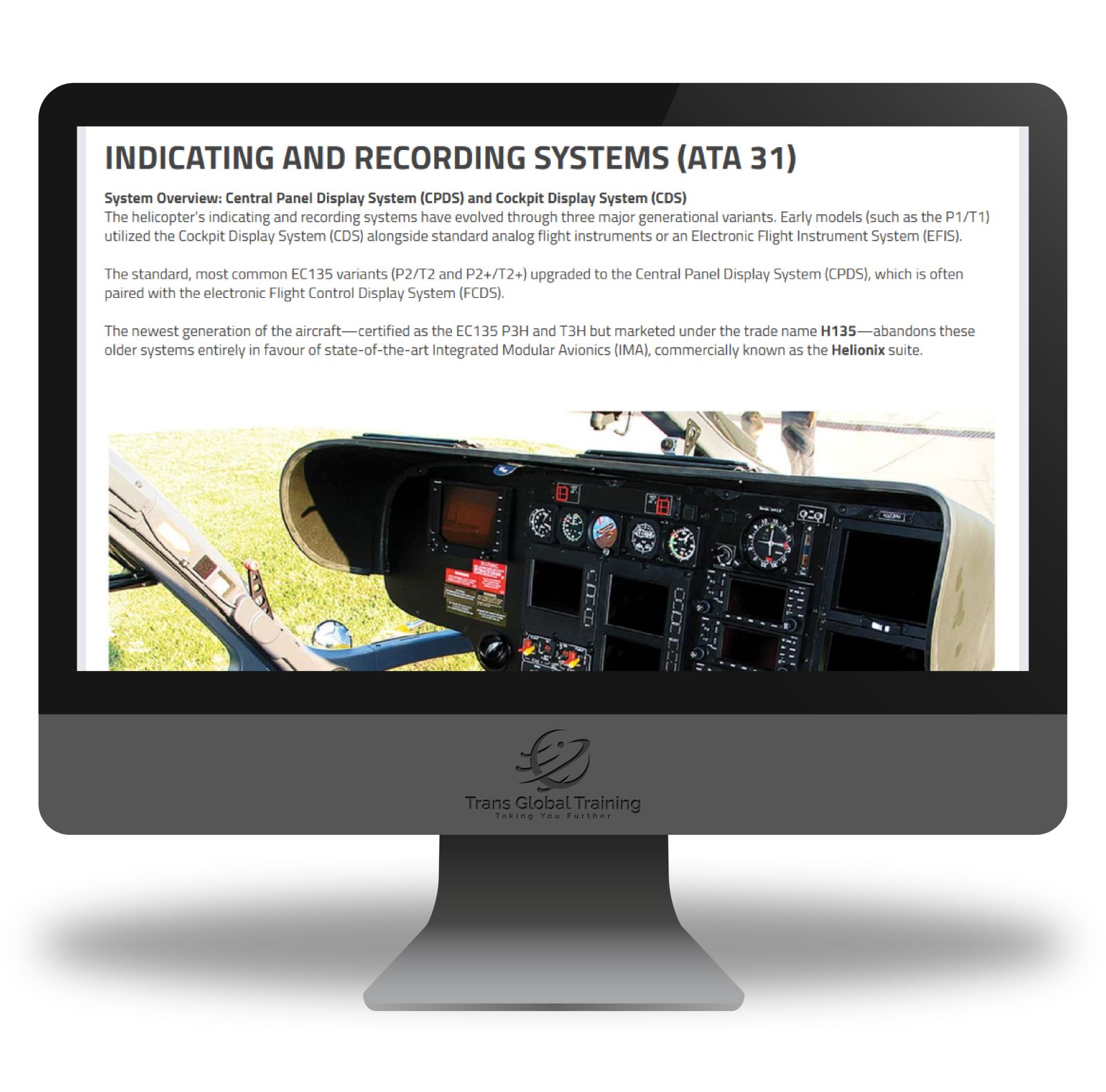
CDS, CPDS, CAD, VEMD, First Limit Indicator, FCDS, maintenance data and Helionix avionics.
ATA 32 – Landing Gear
Skid landing gear construction, crosstubes, energy absorption, aircraft attachment and inspection considerations.
ATA 33 – Lighting
Exterior, landing, search, cockpit, cabin and emergency lighting systems.
ATA 34 – Navigation
Air data, AHRS, VOR, ILS, DME, ADF, radar altimeter, GPS, transponder and Emergency Locator Transmitter systems.
ATA 51 / 52 / 53 / 56 – Airframe, Doors and Windows
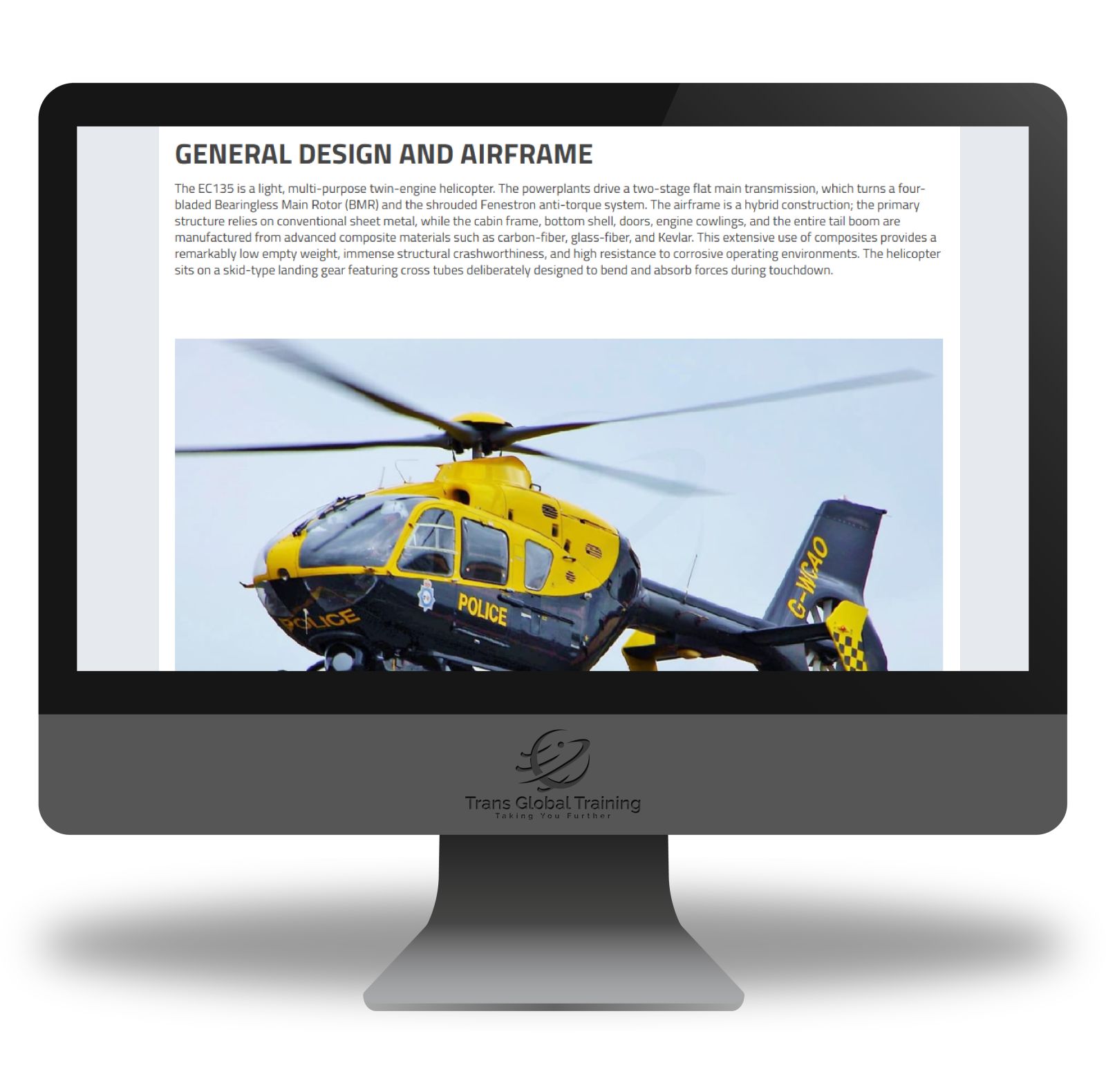
Metallic and composite structure, fuselage construction, tail boom, doors, emergency exits, cowlings, service covers and glazing.
ATA 62 – Main Rotor
Bearingless Main Rotor construction, hub, mast, blades and mast moment indication.
ATA 63 – Main Rotor Drive
Engine driveshafts, main transmission, freewheel units, transmission mounting, lubrication, cooling and rotor brake.
ATA 64 – Tail Rotor
Fenestron construction, hub, blades, Tension-Torsion straps and pitch-change system.
ATA 65 – Tail Rotor Drive
Tail rotor driveshafts, support bearings, flexible couplings and tail rotor gearbox.
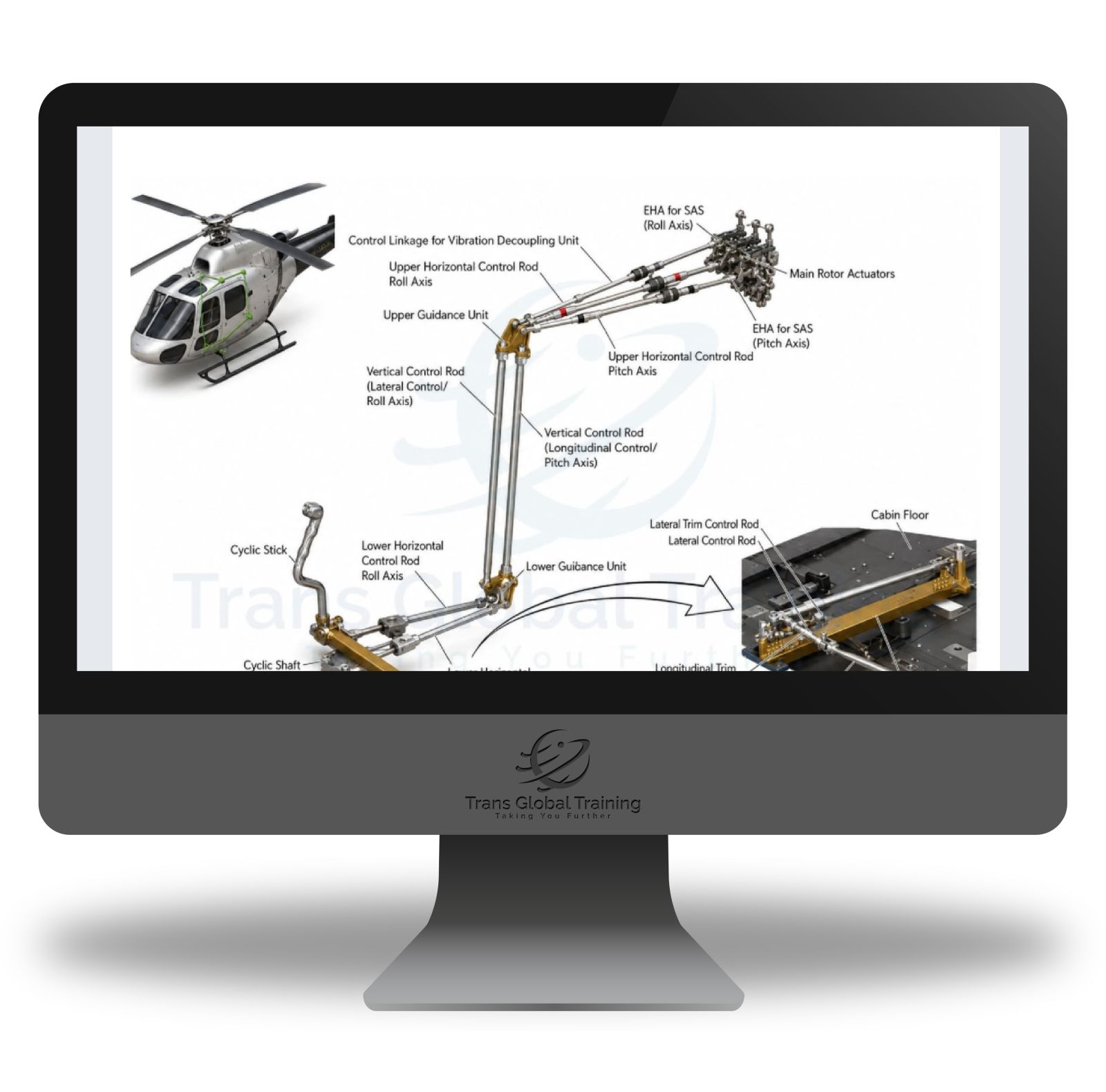
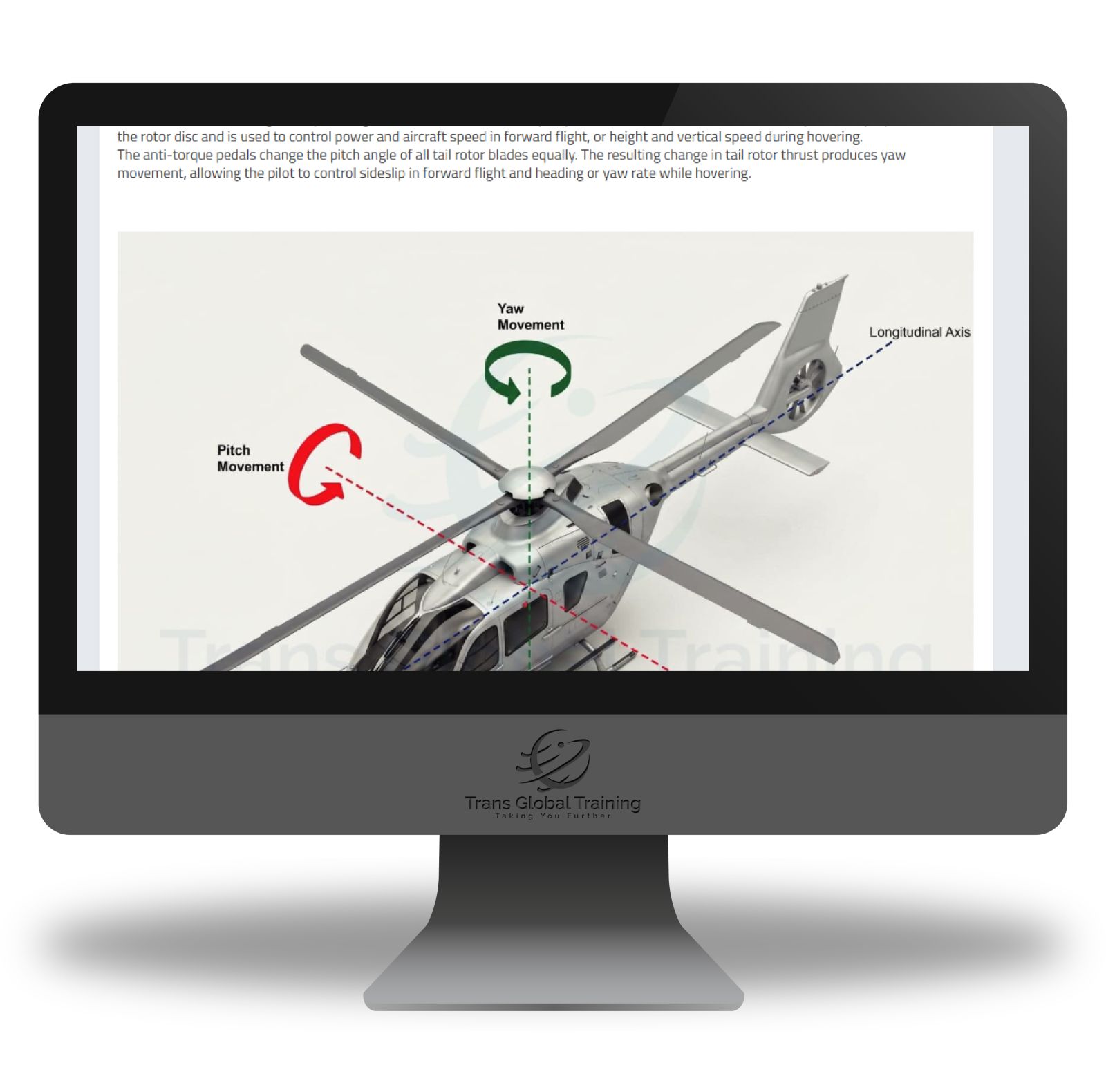
ATA 67 – Rotor Flight Controls
Cyclic, collective and pedal systems, mechanical linkages, mixing unit, swashplate, hydraulic assistance and force trim.
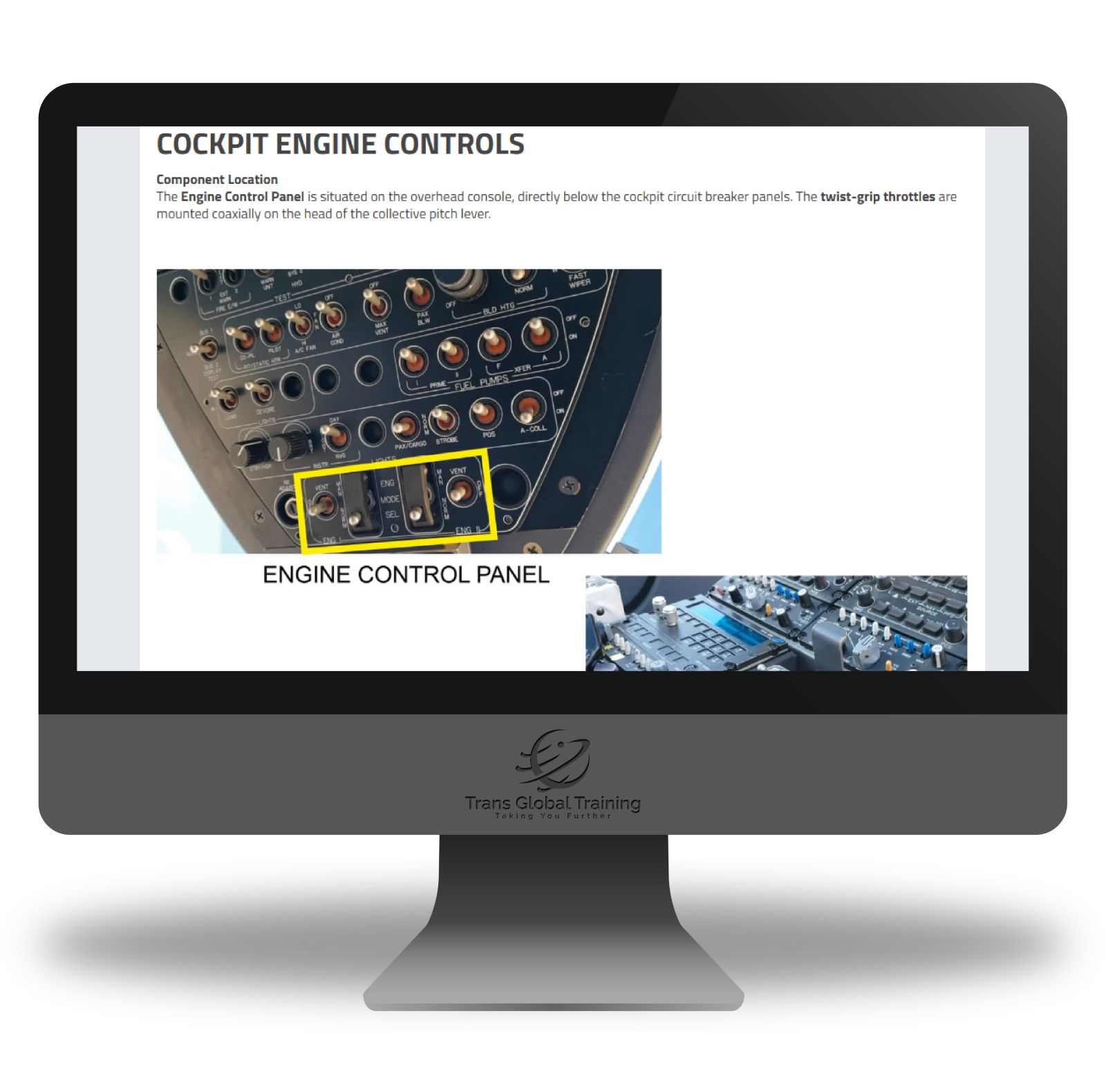
The course reviews the PW206B, PW206B2 and PW206B3 variants, including engine construction, installation, air system, lubrication, fuel delivery, FADEC, cockpit engine controls, ignition, starting, indicating and diagnostic systems.
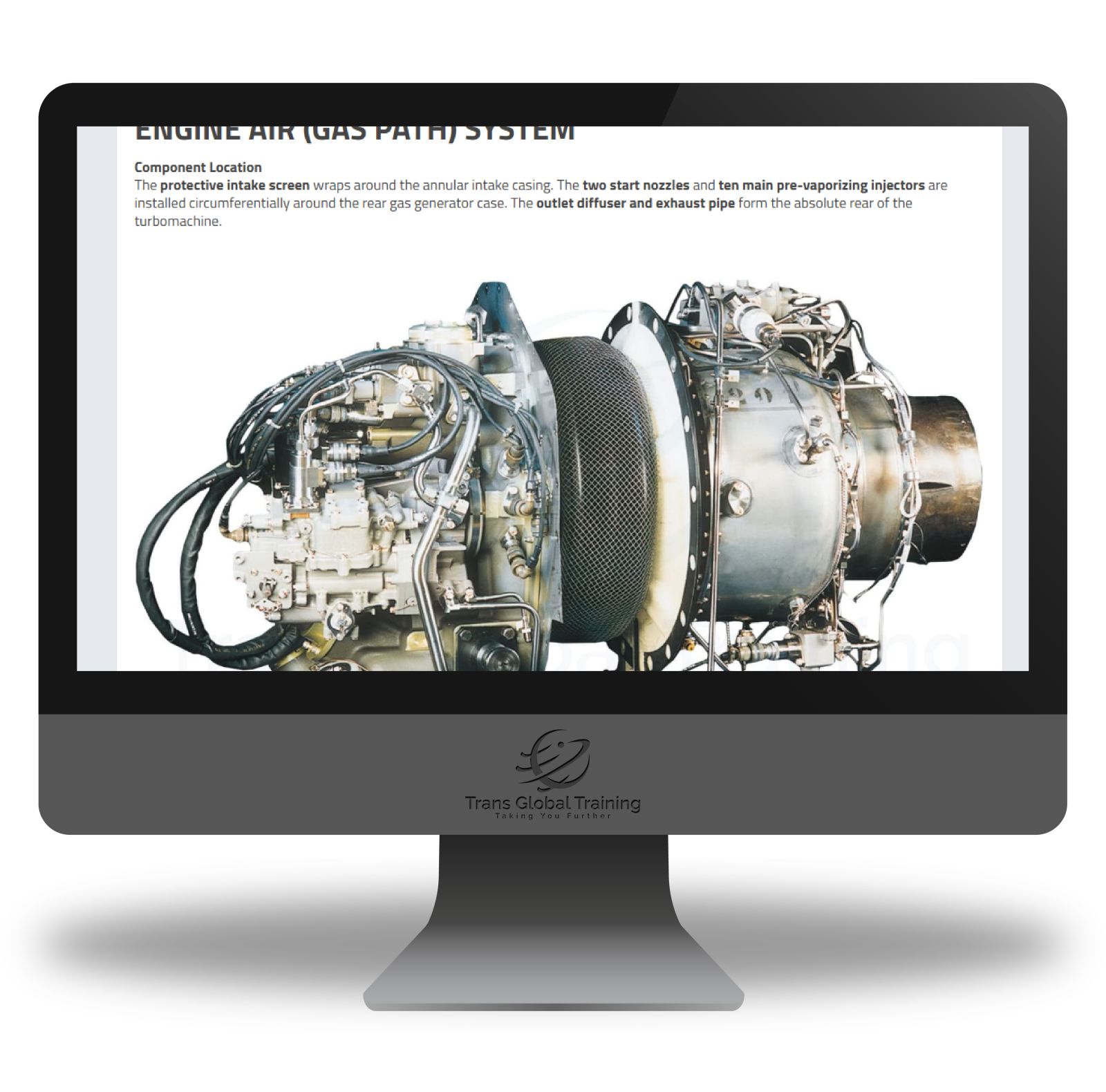
Coverage includes the Arrius 2B1, 2B2 and 2B2+ variants, engine construction and mounting, gas path, lubrication, fuel system, FADEC and manual backup control, starting, ignition, indicating and fire protection.
A dedicated continuation training section examines developments that are increasingly influencing aircraft maintenance and engineering practice.
Topics include predictive maintenance, Health and Usage Monitoring Systems (HUMS), data analytics, artificial intelligence and digital twins, including the increasing use of aircraft sensor data to identify component degradation before failure occurs.
The course also examines the development of digital and fly-by-wire flight control systems, system redundancy, software configuration control, sensor faults and the interaction between physical cockpit components and digital aircraft systems.
Emerging propulsion technology is introduced, including hybrid-electric propulsion, hydrogen, Sustainable Aviation Fuel, pure-electric aircraft and future propulsion concepts.
Modern avionics developments include 5G interference with radio altimeters, ACAS X, ADS-B evolution and future surveillance systems.
The course also considers changing maintenance techniques such as UAS/drone inspections, artificial-intelligence-assisted damage detection, augmented reality and additive manufacturing, together with the implications these technologies may have for future Part-145 maintenance organisations.
Finally, the course introduces Advanced Air Mobility, eVTOL aircraft, autonomous rotorcraft, sensor fusion, high-voltage electrical systems and emerging flight-control technologies, providing engineers with awareness of technologies increasingly entering the aviation sector.
The result is a continuation course that combines H135 / EC135 type knowledge with current aviation technology, helping maintenance personnel refresh their knowledge of the aircraft while remaining familiar with technological developments affecting modern aviation maintenance.
Trans Global Training specialise in providing online self-study courses for technical personnel like technicians, CAMO staff, and other aviation professionals seeking to enhance their expertise. Our comprehensive programs are designed to deepen your knowledge in aircraft maintenance and airworthiness management. With a focus on practical, up-to-date information, our courses allow you to learn at your own pace, anytime and anywhere.
Empower yourself with the skills needed to excel in the ever-evolving aviation industry. Join us today to advance your career and stay ahead in the field of aviation technical services.


Our Bespoke Training Solutions allow you to create customized courses that align perfectly with your organization’s goals. Simply provide us with your training materials, and we’ll develop a program that meets your exact requirements.