
ISK

kr.99,906.45
The Airbus H135 General Familiarisation Course offers an overview of all aircraft systems, including mechanical and avionics. This self-study course takes about 40 hours to complete, requiring students to pass a quiz at the end of each ATA chapter to progress. A completion certificate is awarded upon finishing.
It complies with ATA 104 Level 1 and EASA Part 66 Level 1 standards. Participants have 12 months to start and 6 months to complete the course, plus an extra 90 days for review.
Please use the student’s name for enrollment. Contact us for team discounts for multiple students.
This comprehensive online General Familiarisation course provides maintenance personnel and other aviation professionals with an overview of the Airbus H135 / EC135 airframe, aircraft systems, avionics and powerplants.
The course covers aircraft fitted with both the Pratt & Whitney PW206B series and Safran Arrius 2B series engines and includes the development of the EC135 through to later H135 and Helionix-equipped variants.
The course meets ATA Specification 104 Level 1 – General Familiarisation and complies with the EASA Part-66 Level 1 knowledge definition, providing familiarisation with the principal elements of the aircraft, its systems and powerplants.
This is an approximately 40-hour online self-study course. A knowledge quiz is completed at the end of each ATA chapter before progression to the next chapter. A Certificate of Completion is issued following successful completion of the course.
General Aircraft Overview
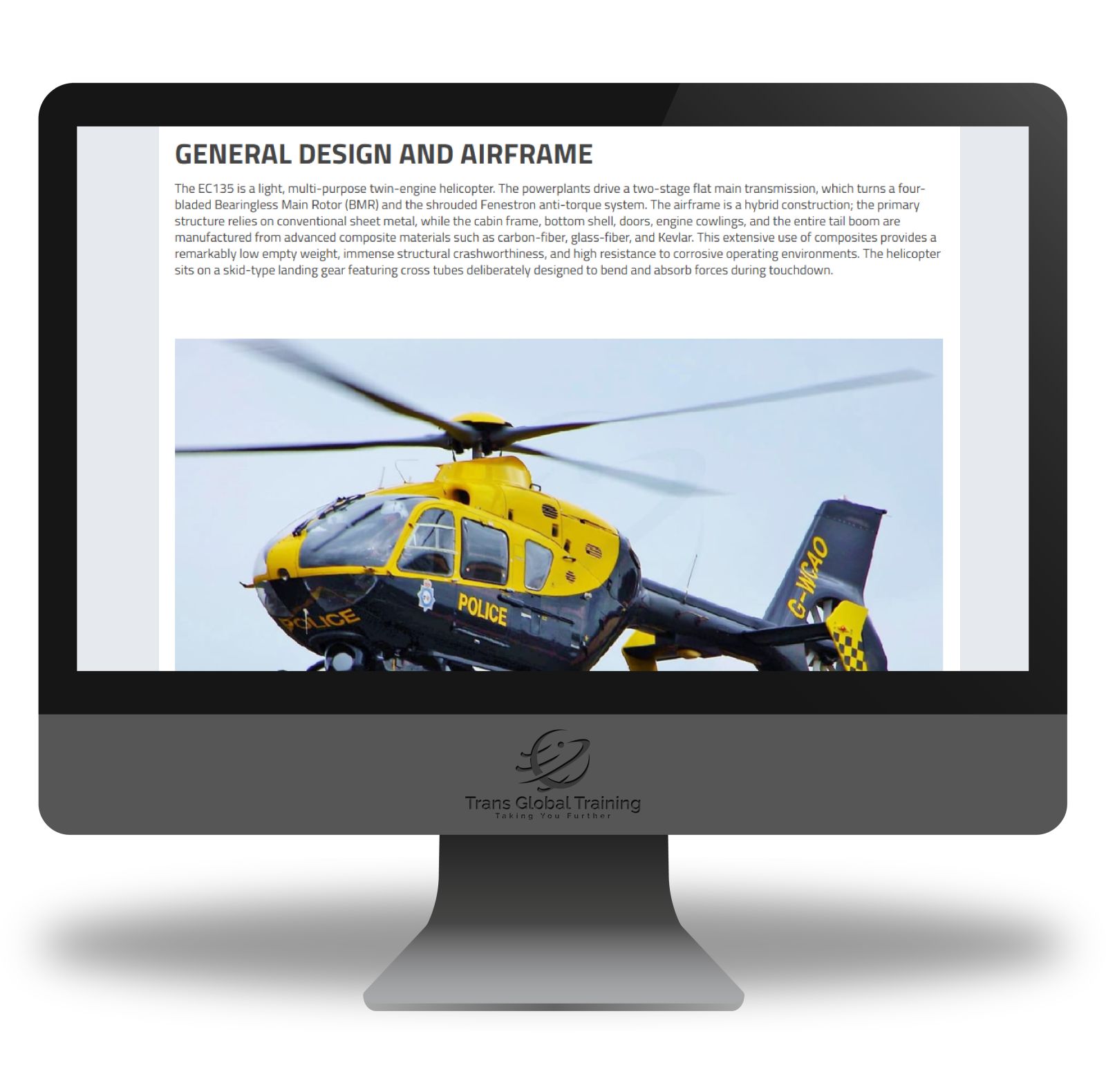
Aircraft history and development, model designation and nomenclature, certification, aircraft construction, general arrangement and mission configurations.
ATA 21 – Environmental Systems
Ventilation, bleed-air heating, heating control and protection, emergency operation and optional air-conditioning systems.
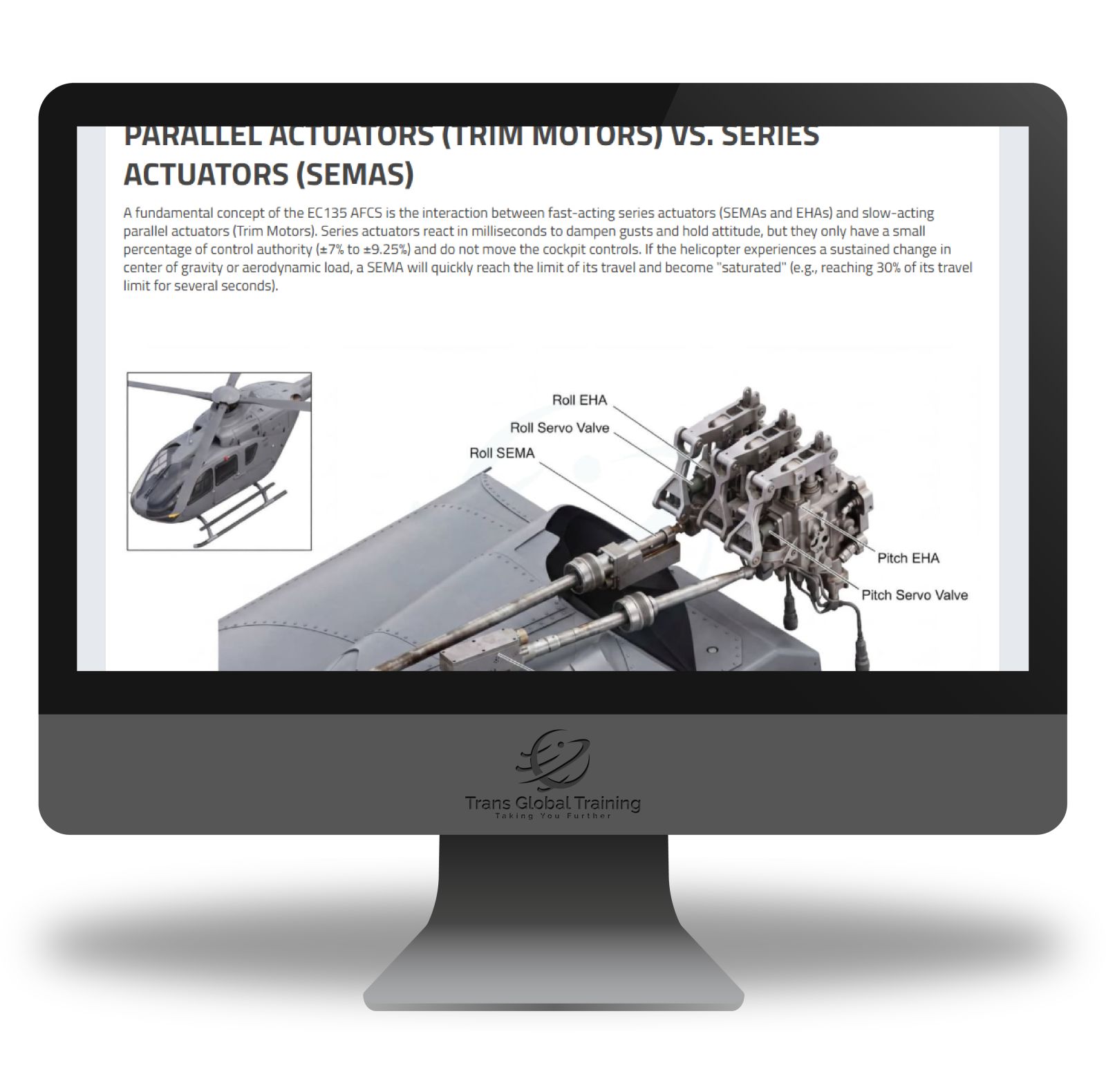
ATA 22 – Automatic Flight Control System
Yaw Stability Augmentation System, Pitch and Roll SAS, Pitch Damper, Automatic Flight Control System, autopilot modes, actuators, autotrim and associated sensor inputs.
ATA 23 – Communications
Audio Management Unit, Audio Control Panels, passenger and intercom systems, emergency reversion, VHF communications and associated navigation interfaces.
ATA 24 – Electrical Power
DC electrical generation and distribution, battery system, starter-generators, Electrical Master Boxes, busbars, external power, load shedding and AC static inverters.
ATA 26 – Fire Protection
Engine compartment firewalls, fire detection, cockpit fire warnings, emergency engine shutdown and the optional engine fire extinguishing system.
ATA 28 – Fuel System
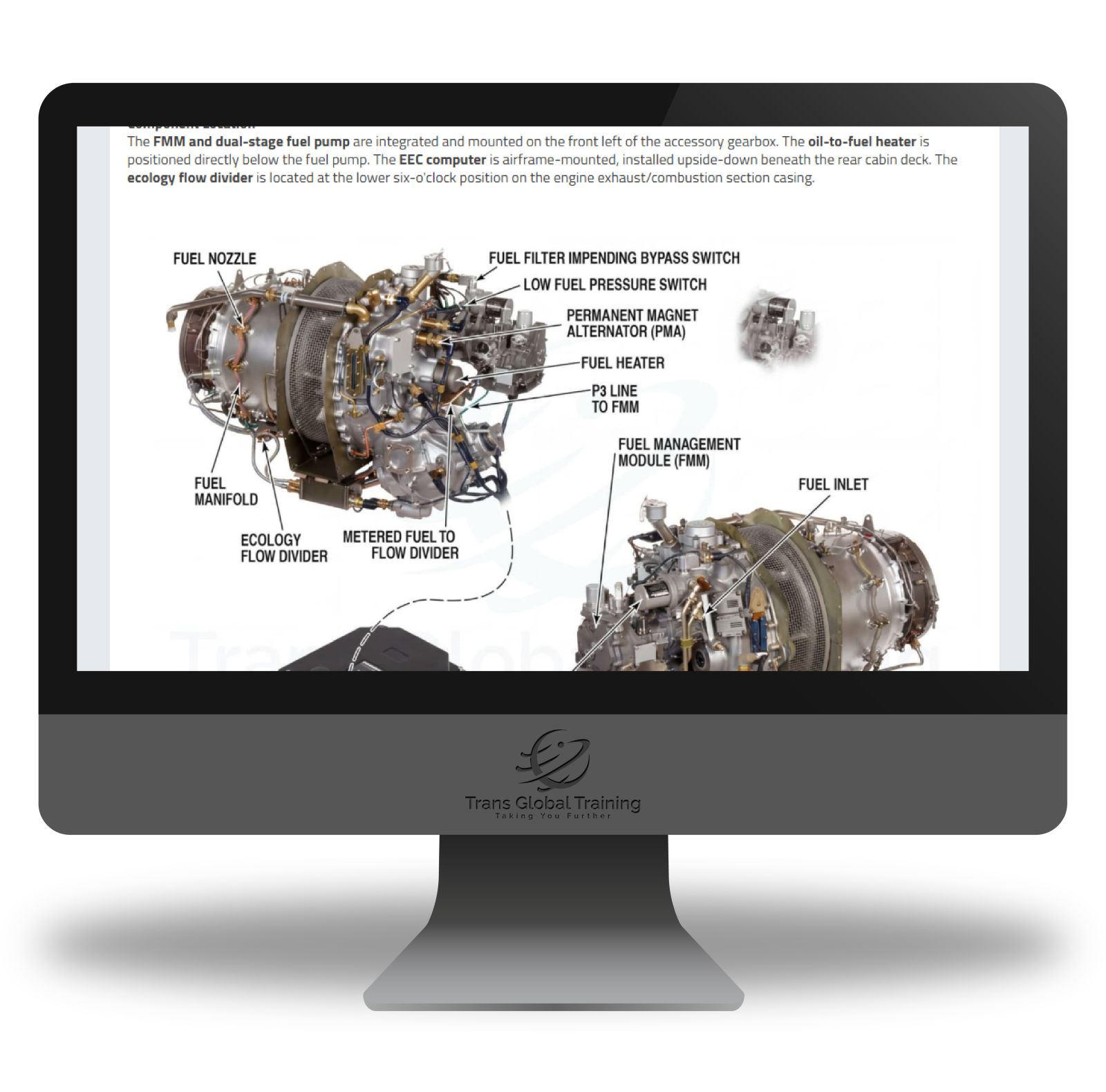
Fuel tanks, expansion and venting, fuel supply and pumping, quantity indication, fuel management, low-level warnings and aircraft refuelling.
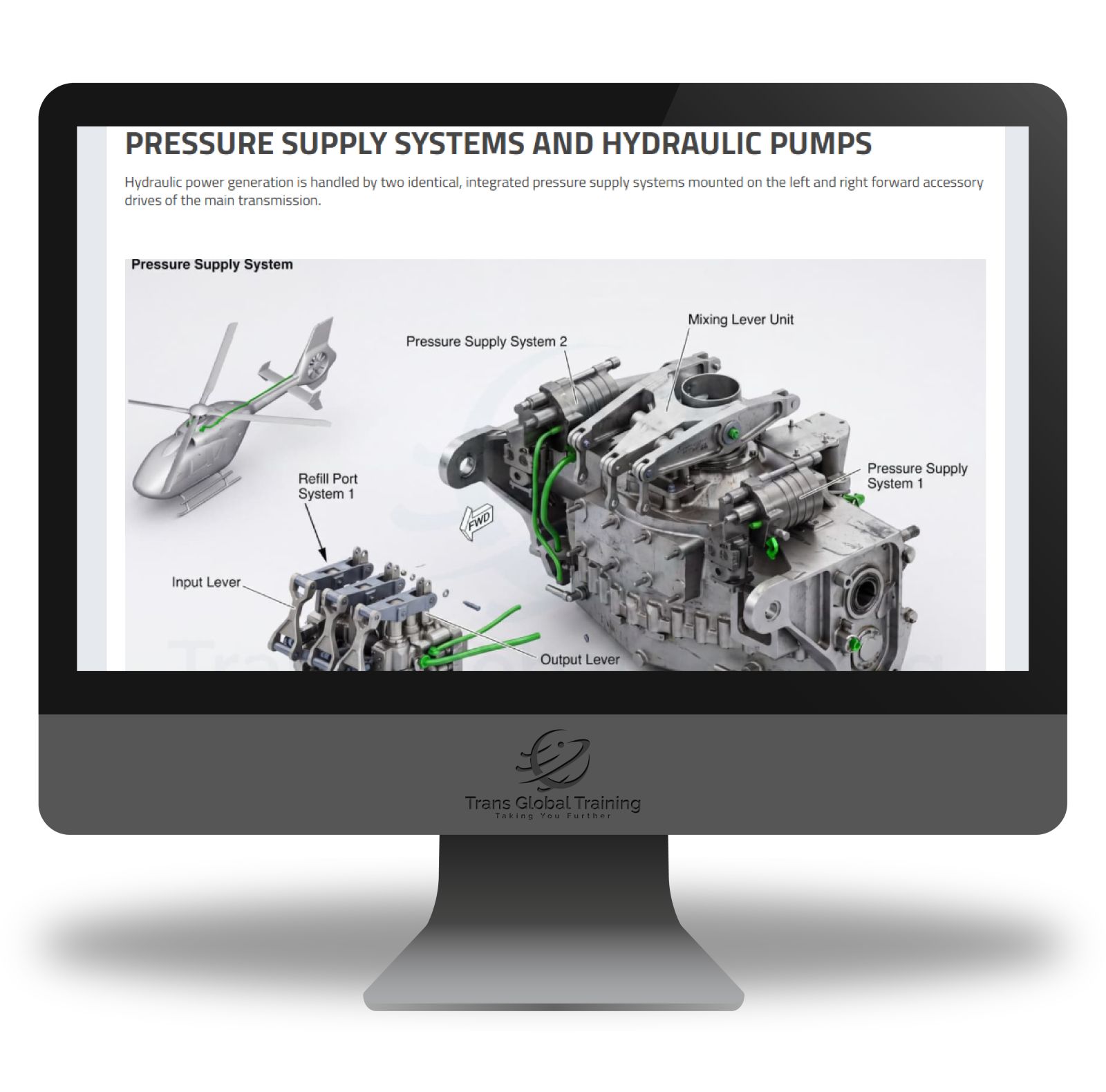
ATA 29 – Hydraulic Power
Dual hydraulic system architecture, pumps, reservoirs, pressure regulation, system monitoring, hydraulic testing and flight-control servo actuators.
ATA 30 – Ice and Rain Protection
Icing limitations, pitot-static heating, windshield defrosting and defogging and windshield wiper systems.
ATA 31 – Indicating and Recording Systems
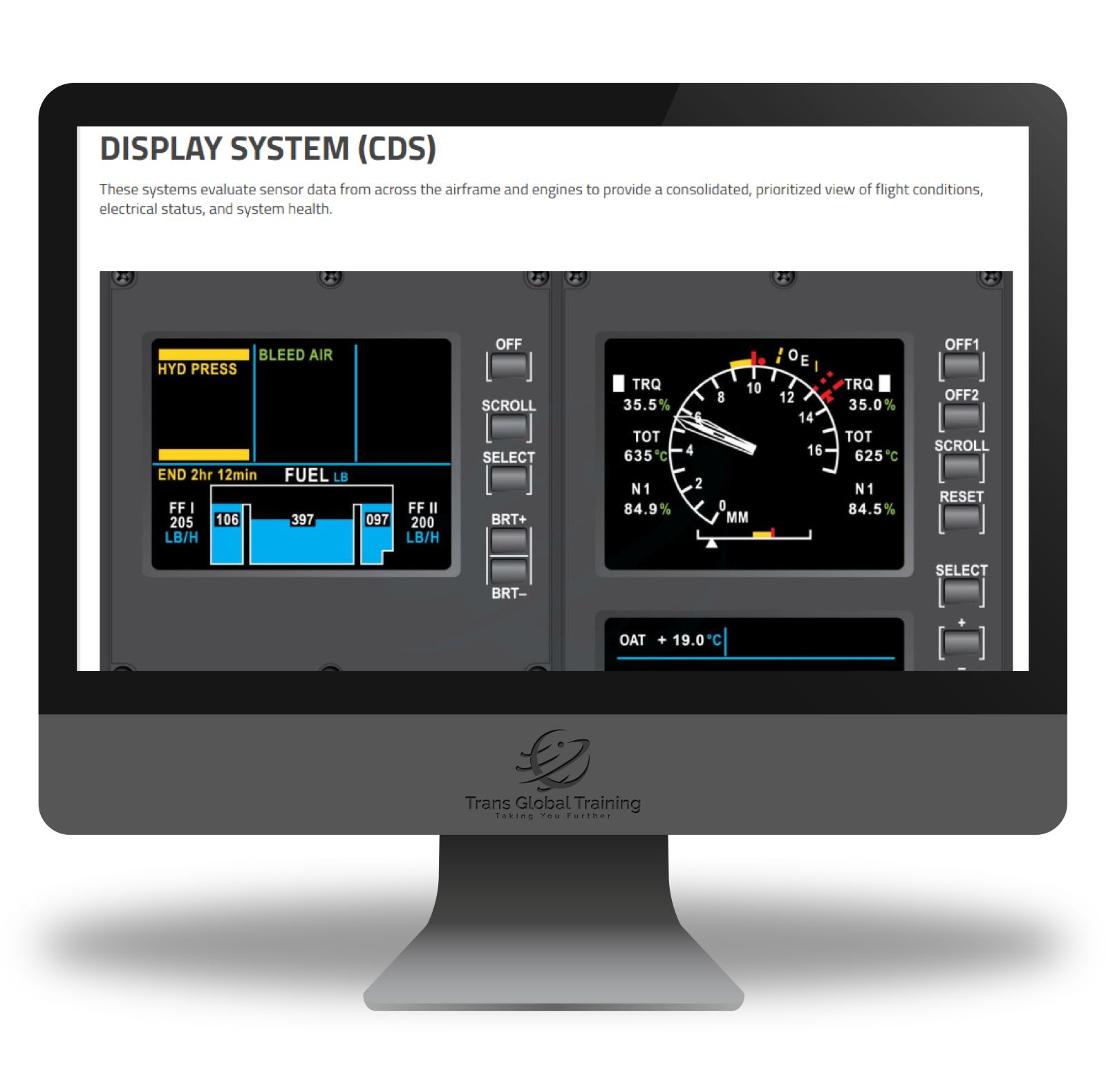
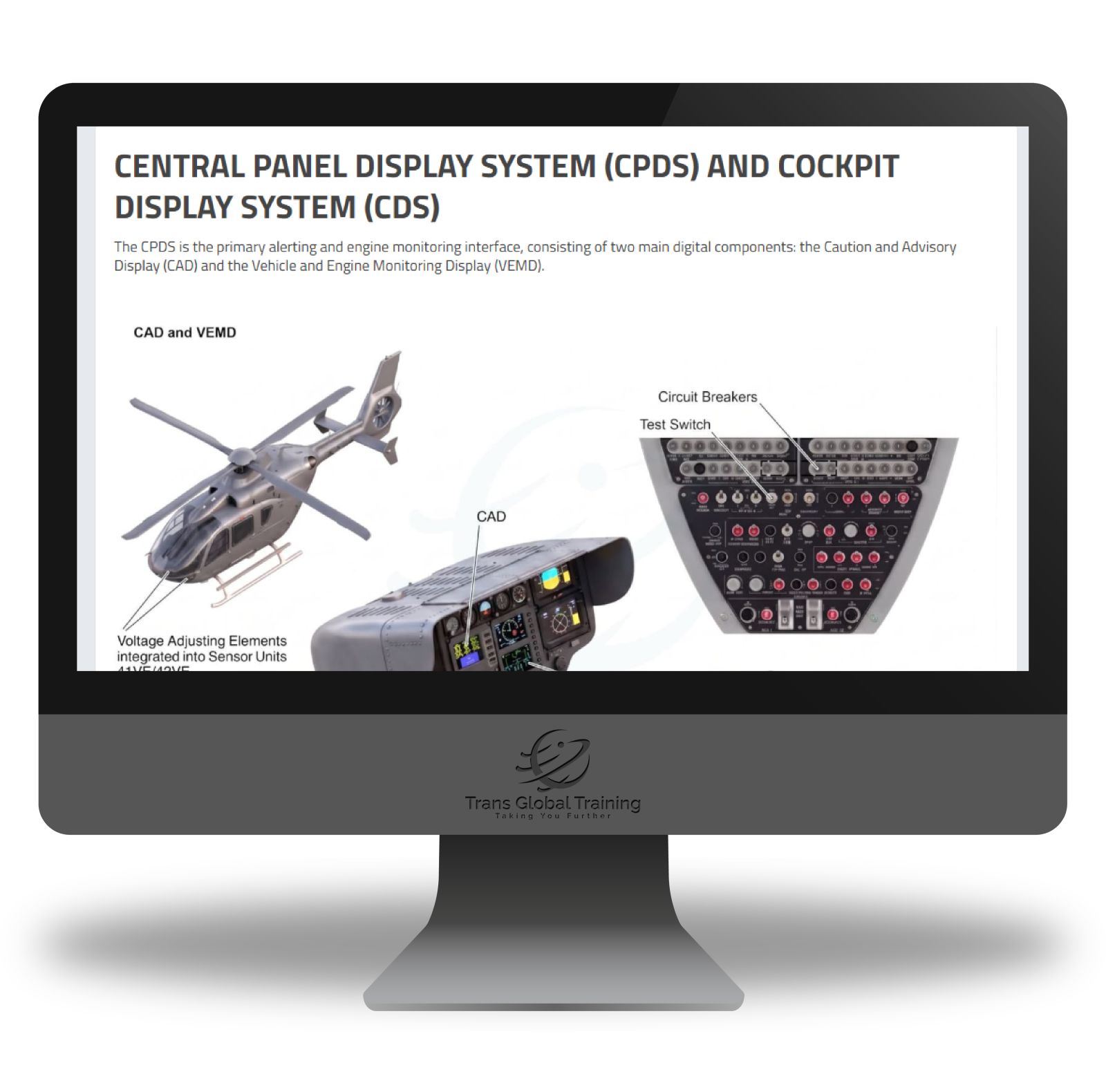
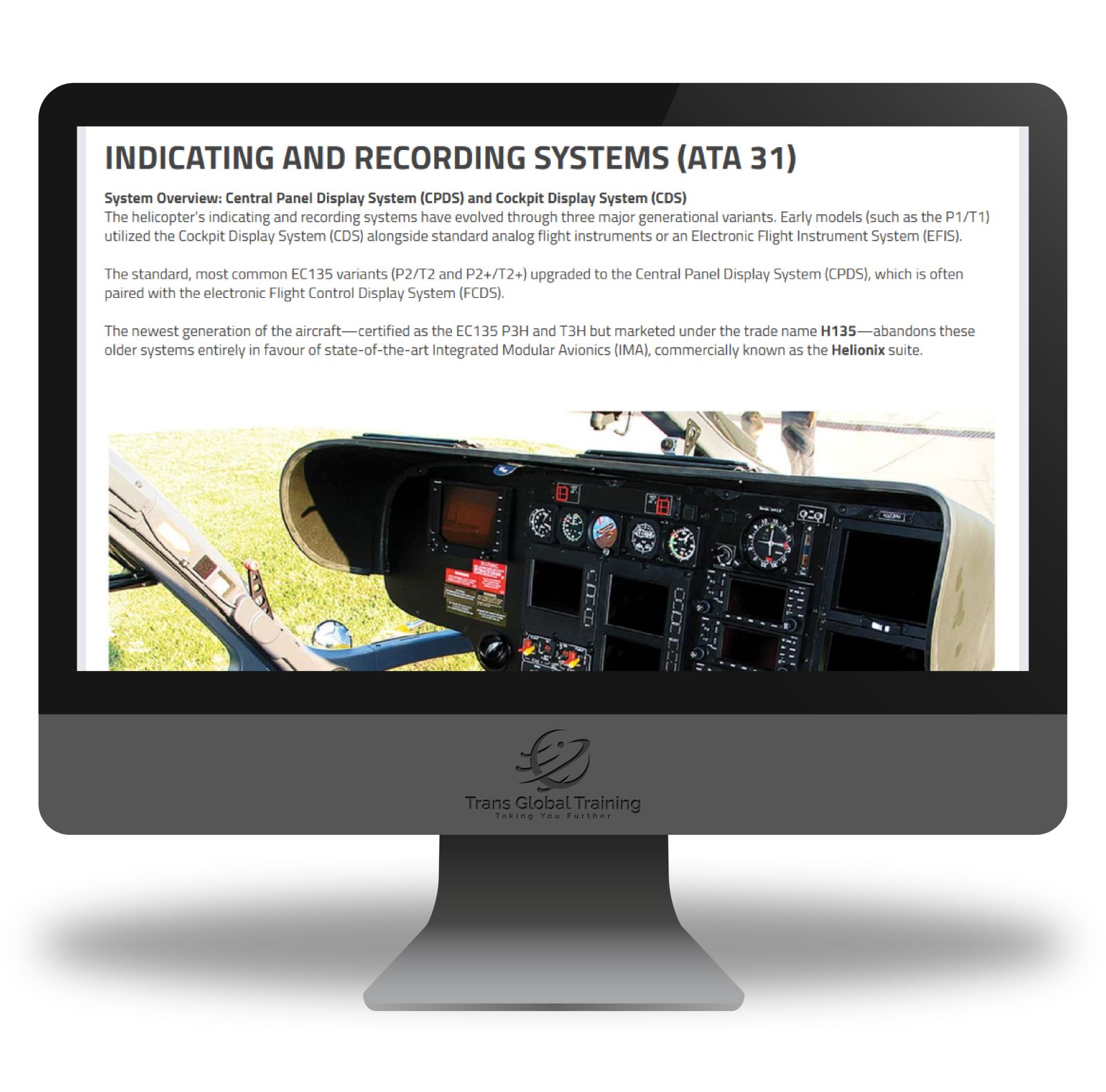
Cockpit Display System (CDS), Central Panel Display System (CPDS), CAD, VEMD, First Limit Indicator, Flight Control Display System, maintenance data recording, warning systems and Helionix avionics.
ATA 32 – Landing Gear
Skid landing gear construction, crosstubes, aircraft attachment, energy absorption, ground equipment and deformation monitoring.
ATA 33 – Lighting
Exterior position and anti-collision lighting, landing and search lights, cockpit and cabin lighting and emergency lighting.
ATA 34 – Navigation
Air Data Computers, Attitude Heading Reference Systems, navigation displays, sensor reconfiguration, VOR, ILS, DME, ADF, radar altimeter, GPS, transponder and Emergency Locator Transmitter.
ATA 51 / 52 / 53 / 56 – Airframe, Doors and Windows
Airframe construction, composite and metallic structures, cabin and fuselage structure, tail boom, doors, emergency exits, service covers, cowlings and aircraft glazing.
ATA 62 – Main Rotor
Four-bladed Bearingless Main Rotor, rotor hub and mast, blade construction, flexbeam principles and mast moment indication.
ATA 63 – Main Rotor Drive
Engine driveshafts, main transmission, freewheel units, transmission mounting, Anti-Resonance Isolation System, lubrication, cooling, monitoring and rotor brake.
ATA 64 – Tail Rotor
Fenestron shrouded tail rotor, blade and hub construction, Tension-Torsion straps and pitch-change system.
ATA 65 – Tail Rotor Drive
Tail rotor driveshaft system, flexible couplings, support bearings and tail rotor gearbox.
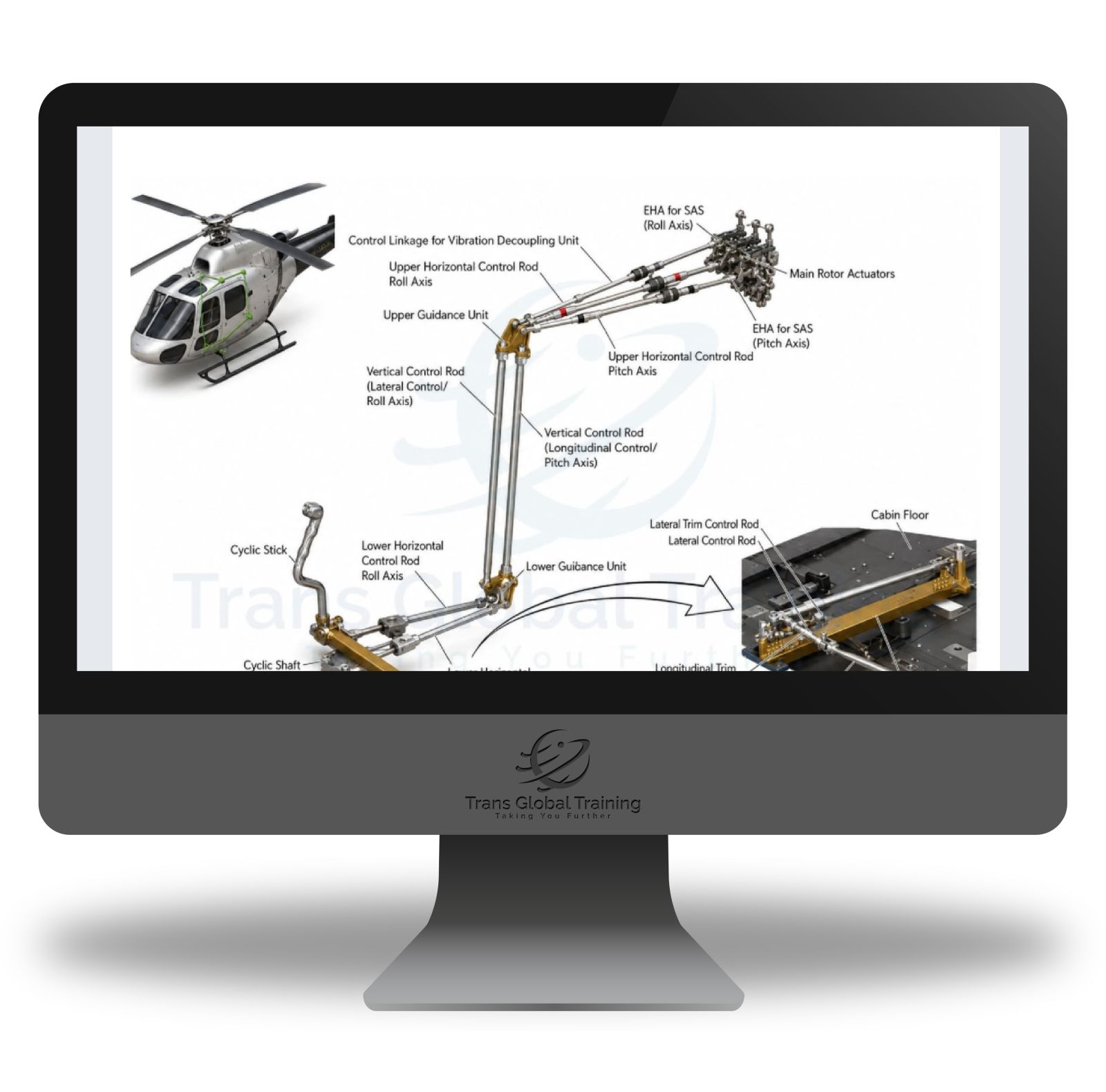
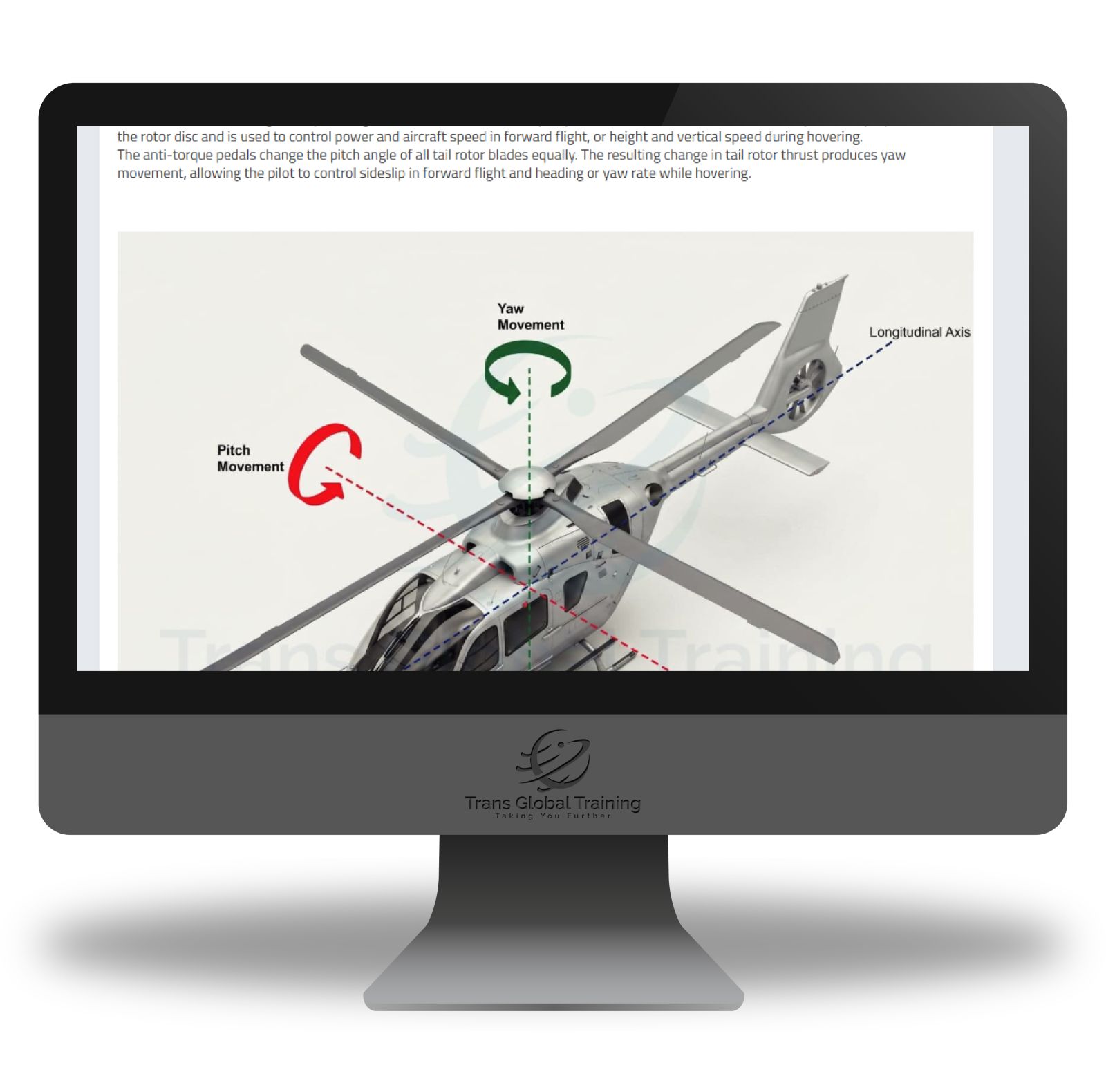
ATA 67 – Rotor Flight Controls
Cyclic, collective and pedal controls, mechanical control linkages, mixing system, swashplate, hydraulic actuators, Fenestron controls and force-trim system.
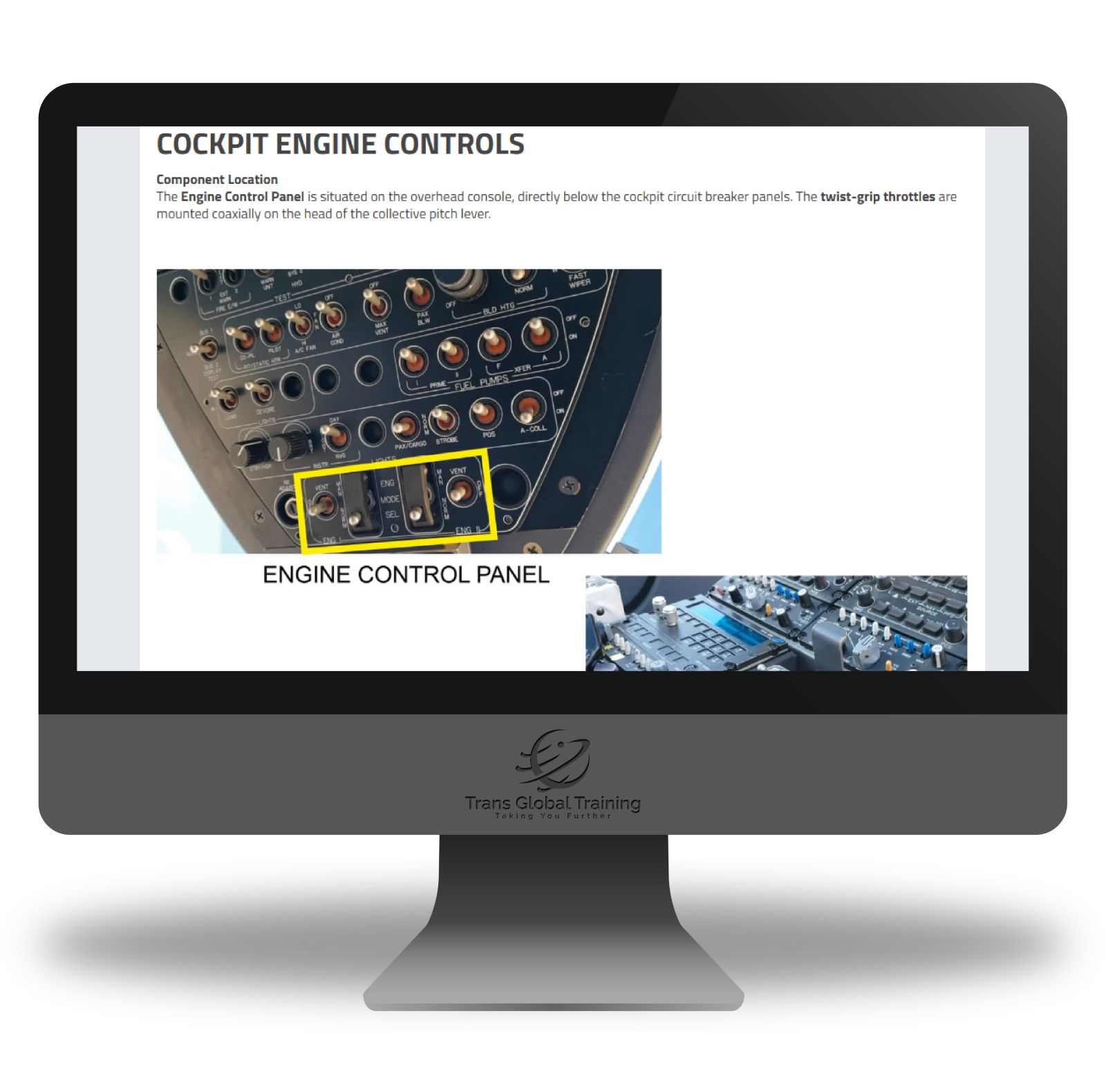
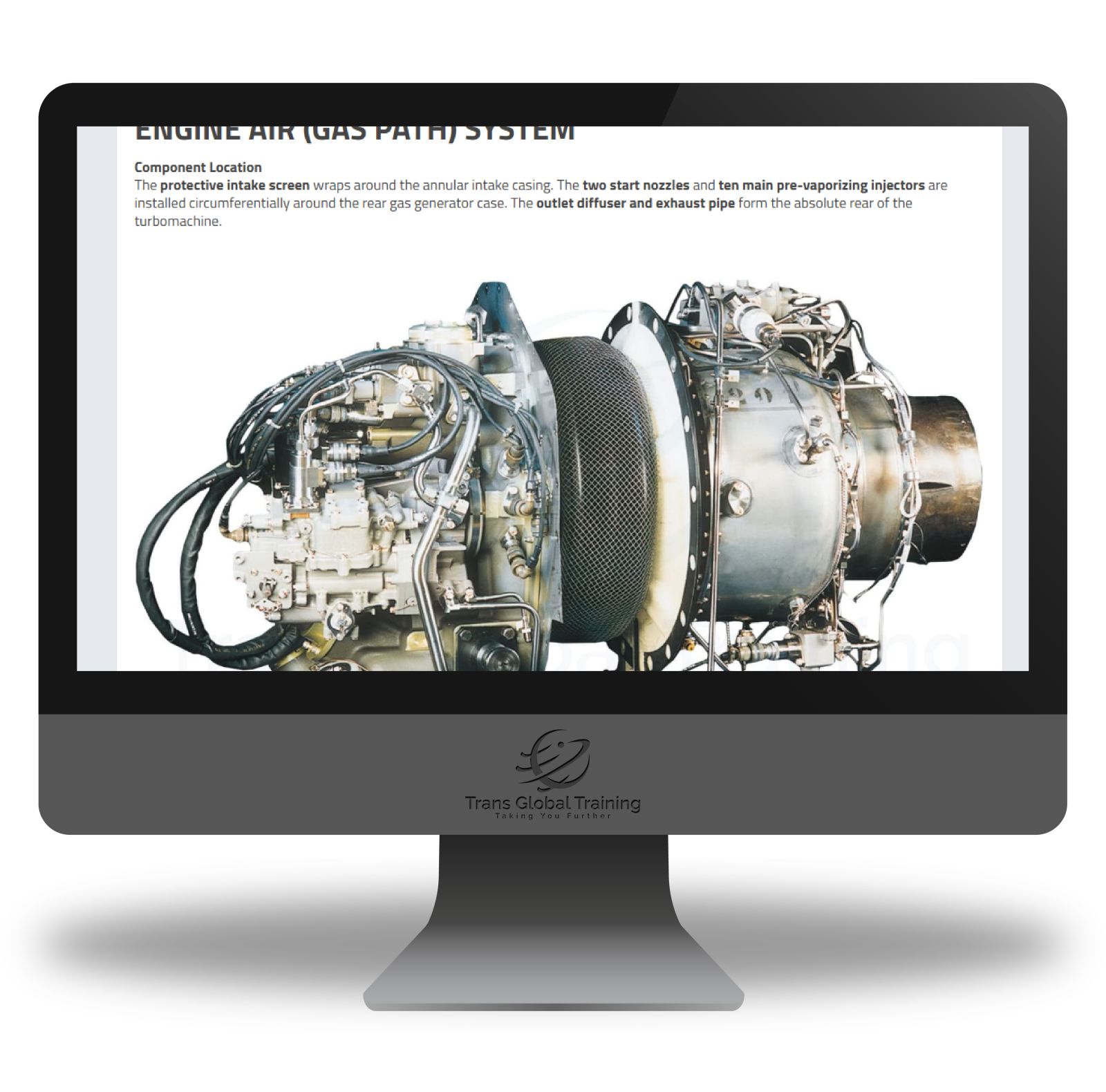
Coverage includes the PW206B, PW206B2 and PW206B3 engine variants, engine construction and mounting, gas path, lubrication, fuel delivery, FADEC, cockpit engine controls, ignition, starting, engine indicating and diagnostic systems. The PW206 family uses a free-turbine modular architecture comprising turbomachinery and reduction gearbox sections.
Coverage includes the Arrius 2B1, 2B2 and 2B2+ variants, modular engine construction, mounting, gas path, lubrication, fuel system, FADEC and hydromechanical backup control, starting, ignition, indicating and engine fire protection. The Arrius is divided into the field-replaceable M01 reduction gearbox and M02 gas-generator/power-turbine modules.
On completion of the course, the student should be able to recognise the principal elements of the aircraft, describe the general layout of its major systems and powerplants, identify relevant safety precautions and maintenance practices, and use the terminology associated with the Airbus H135 / EC135 at General Familiarisation level.
Trans Global Training specialise in providing online self-study courses for technical personnel like technicians, CAMO staff, and other aviation professionals seeking to enhance their expertise. Our comprehensive programs are designed to deepen your knowledge in aircraft maintenance and airworthiness management. With a focus on practical, up-to-date information, our courses allow you to learn at your own pace, anytime and anywhere.
Empower yourself with the skills needed to excel in the ever-evolving aviation industry. Join us today to advance your career and stay ahead in the field of aviation technical services.


Our Bespoke Training Solutions allow you to create customized courses that align perfectly with your organization’s goals. Simply provide us with your training materials, and we’ll develop a program that meets your exact requirements.